
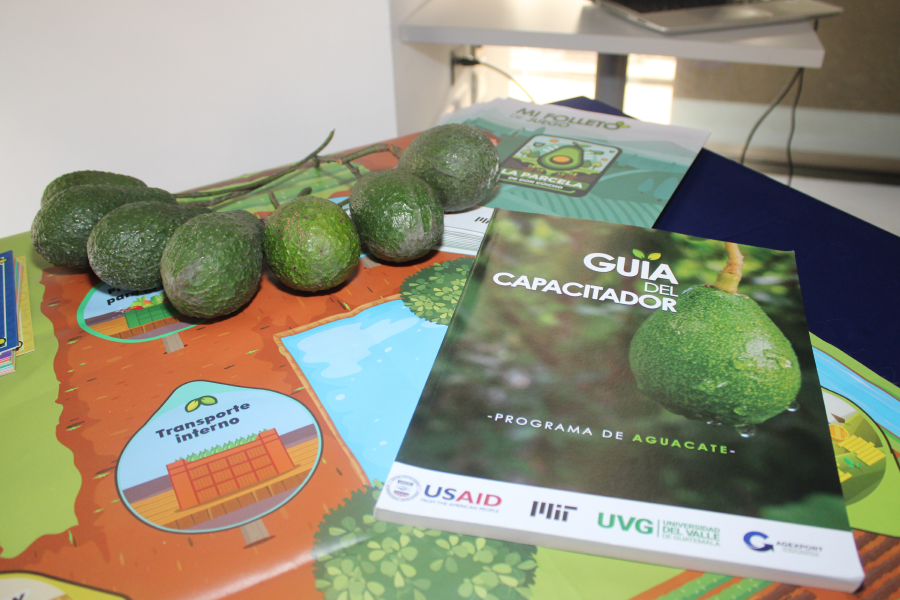
Cross-Sector Collaboration results in Innovative Toolkit
Date:
October 29, 2024
Date:
October 29, 2024
By: Bianca Contreras
The ASPIRE Project has developed a teaching toolkit to train avocado producers in Guatemala, addressing a knowledge gap in post-harvest practices. The toolkit, designed to improve both financial and production management, aims to enhance the efficiency and sustainability of avocado farming.
The research team behind this initiative, including Ana Alicia Paz, Engineer Adilia Blandón from Universidad del Valle de Guatemala (UVG), alongside representatives from the Ministry of Agriculture (DIFOPROCO), have completed the development of an innovative teaching toolkit that provides educational videos, an immersive board game and technical specifications, that together, instruct avocado producers in the financial administration and essential post-harvest practices.
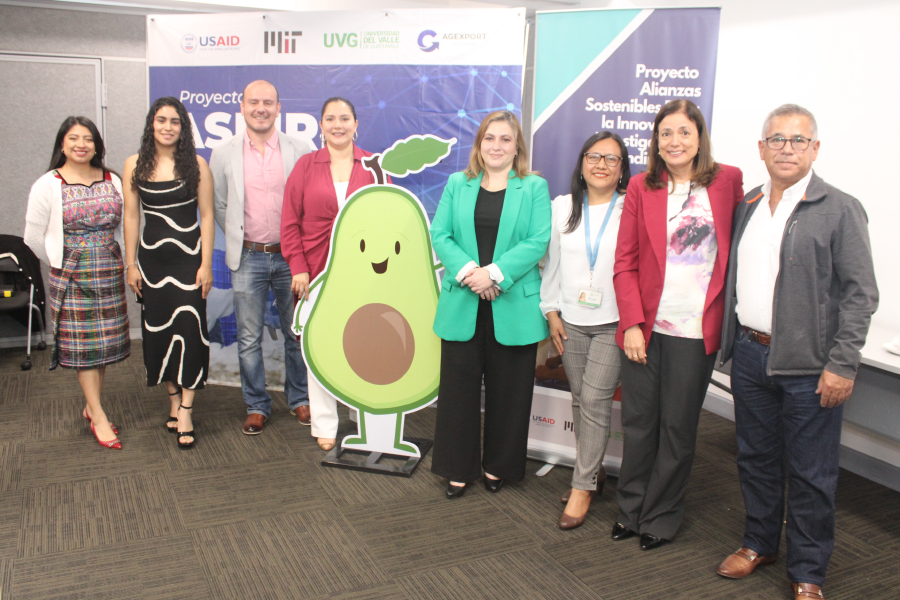
UVG researchers, AGEXPORT and DIFOPROCO representatives. Photo: ASPIRE
This project involved the collaboration of several cooperatives in the Sacatepéquez and Chimaltenango regions, including MUNDO VERDE, the San Miguel Dueñas Agricultural Producers Association, Aguacate GT, the Misael Marroquín Agricultural Cooperative, and the Agricultural Association Forjadores de Oportunidades de Zaragoza (AFOZA). Key partners in this USAID-funded initiative included the Massachusetts Institute of Technology (MIT) and the Guatemalan Exporters Association (AGEXPORT).
Successful Implementation in Public and Private Sectors
To date, ASPIRE has trained 60 avocado producers and about 10 technicians who will share their knowledge with other producers. Their participation in this initiative raises awareness of best practices in avocado post-harvest management and lays the foundation for broader adoption of these practices across the sector.
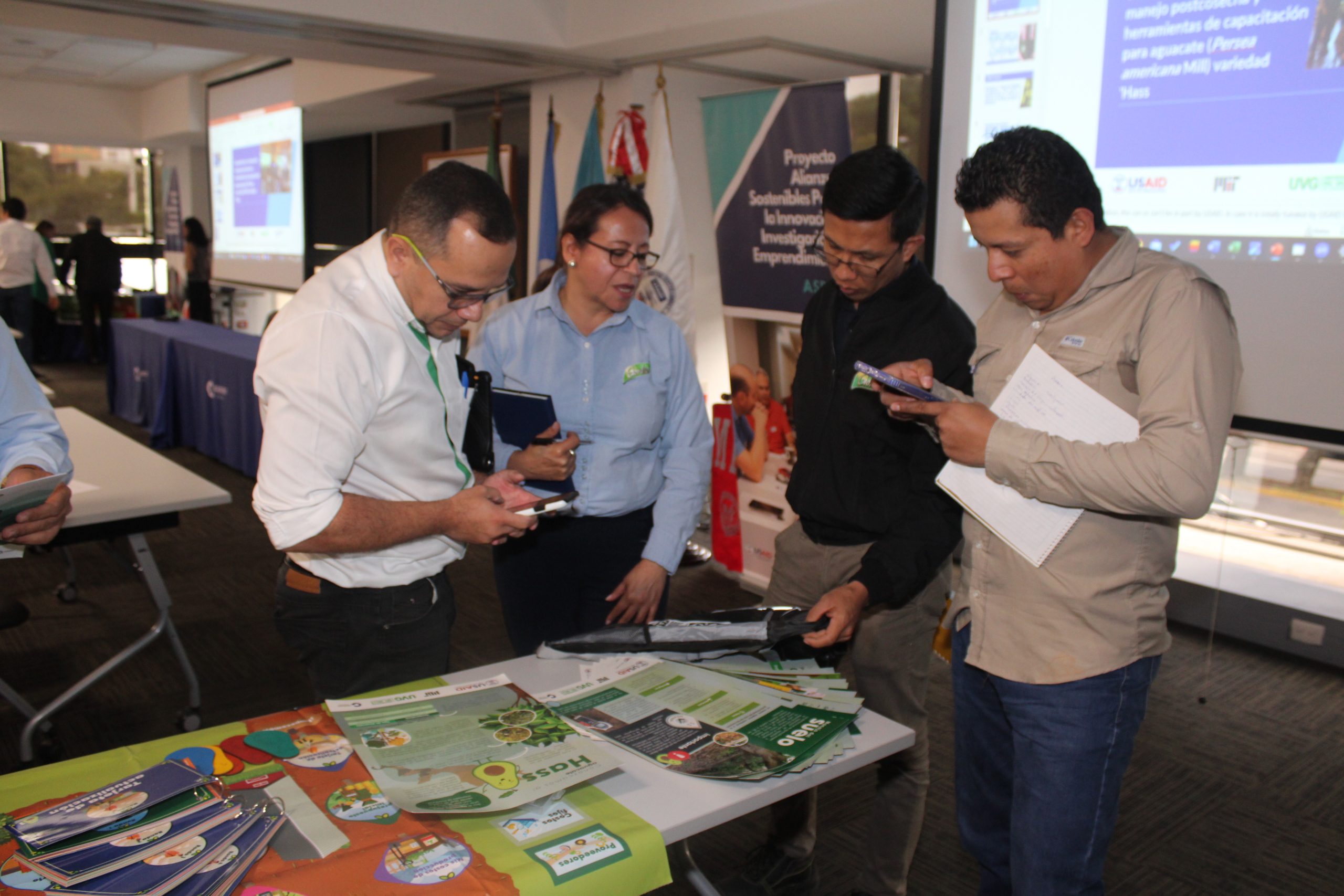
Avocado producers observe educational game. Photo: ASPIRE
Integration into Higher Education Programs
The toolkit’s impact extends beyond producer training. Educational programs at various higher education institutions in Guatemala, including Universidad del Valle de Guatemala (UVG) and its satellite campuses, now include this content. The toolkit is now part of the Agricultural Export Products technical degree curriculum and the bachelor’s degree in Agricultural and Livestock Technology. By strengthening students’ knowledge of avocado post-harvest practices, they will continue to share and apply the knowledge gained from this project as they enter the workforce, creating long-term sustainability and broader impact for avocado producers across the country, better equipping the next generation of agricultural professionals to implement sustainable practices in the field.
Optimistic User Feedback
Engineer Manuel Ixmata, one of the users of the educational game “Don Güicho’s Plot,” shared his thoughts on the toolkit: “It’s an excellent methodology for decision-making in avocado production and post-harvest management, and you could easily apply it to other crops. It also helps to spark interest in farming by showing the real-life consequences of different decisions in farming scenarios.”
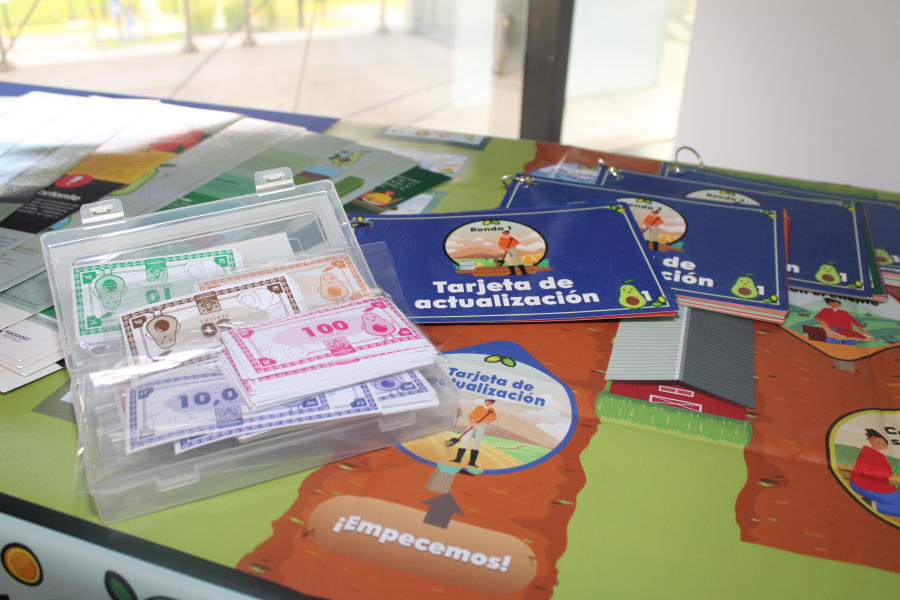
“Don Güicho’s Orchard” board game. Image: ASPIRE
Adilia Blandón emphasized the toolkit’s effectiveness, noting that it solves a real-world problem. Both producers and students find the material engaging and fun, making it a valuable tool for learning. The impact is felt not only in academic programs but also in its widespread use by both the public and private sectors to train avocado producers, implemented by the Ministry of Agriculture (MAGA).
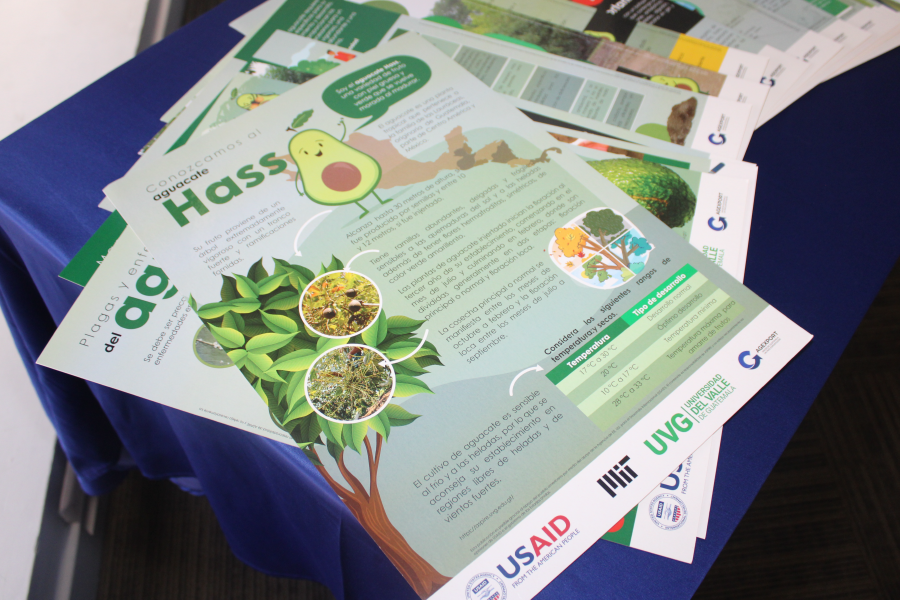
Educational infographics. Photo: ASPIRE
Visit of the U.S. ambassador
On September 24, 2024, U.S. Ambassador Tobin Bradley visited Universidad del Valle de Guatemala (UVG), where he had the opportunity to experience the toolkit’s educational game “Don Güicho’s Orchard” firsthand. Engaging with students and UVG staff, the Ambassador played the game in an interactive and informal setting. His feedback was overwhelmingly positive, and he took the opportunity to congratulate the ASPIRE team for their innovative work in advancing avocado post-harvest practices in Guatemala.
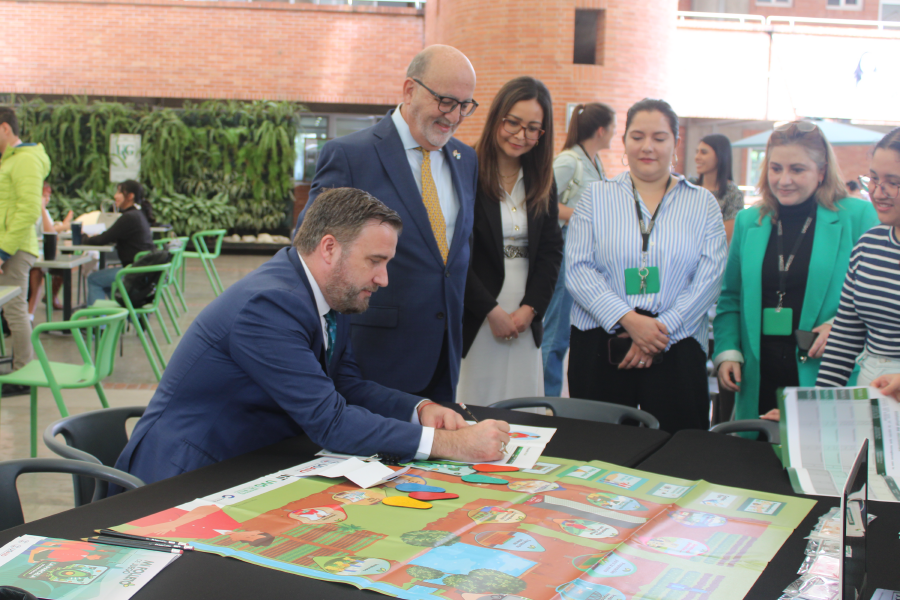
US Ambassador Tobin Bradley plays “Don Güicho’s Orchard” Photo: ASPIRE
About the ASPIRE project
The Achieving Sustainable Partnerships for Innovation, Research and Entrepreneurship (ASPIRE) Project is a five-year, $15 million project funded by USAID and implemented by the Massachusetts Institute of Technology (MIT), Universidad del Valle de Guatemala (UVG), and the Guatemalan Exporters Association (AGEXPORT), with the goal of creating a world-class replicable model for how universities, in collaboration with the private sector, government, and local communities, can respond to local and regional development needs. The project implements a collaborative approach, based on MIT’s experience in the innovation ecosystem.