
UVG Industrial Engineering Student Develops Strategic Proposals for Guatemala’s Natural Rubber Value Chain with ASPIRE Project Support
Date:
November 28, 2024
Date:
November 28, 2024
By: Bianca Contreras
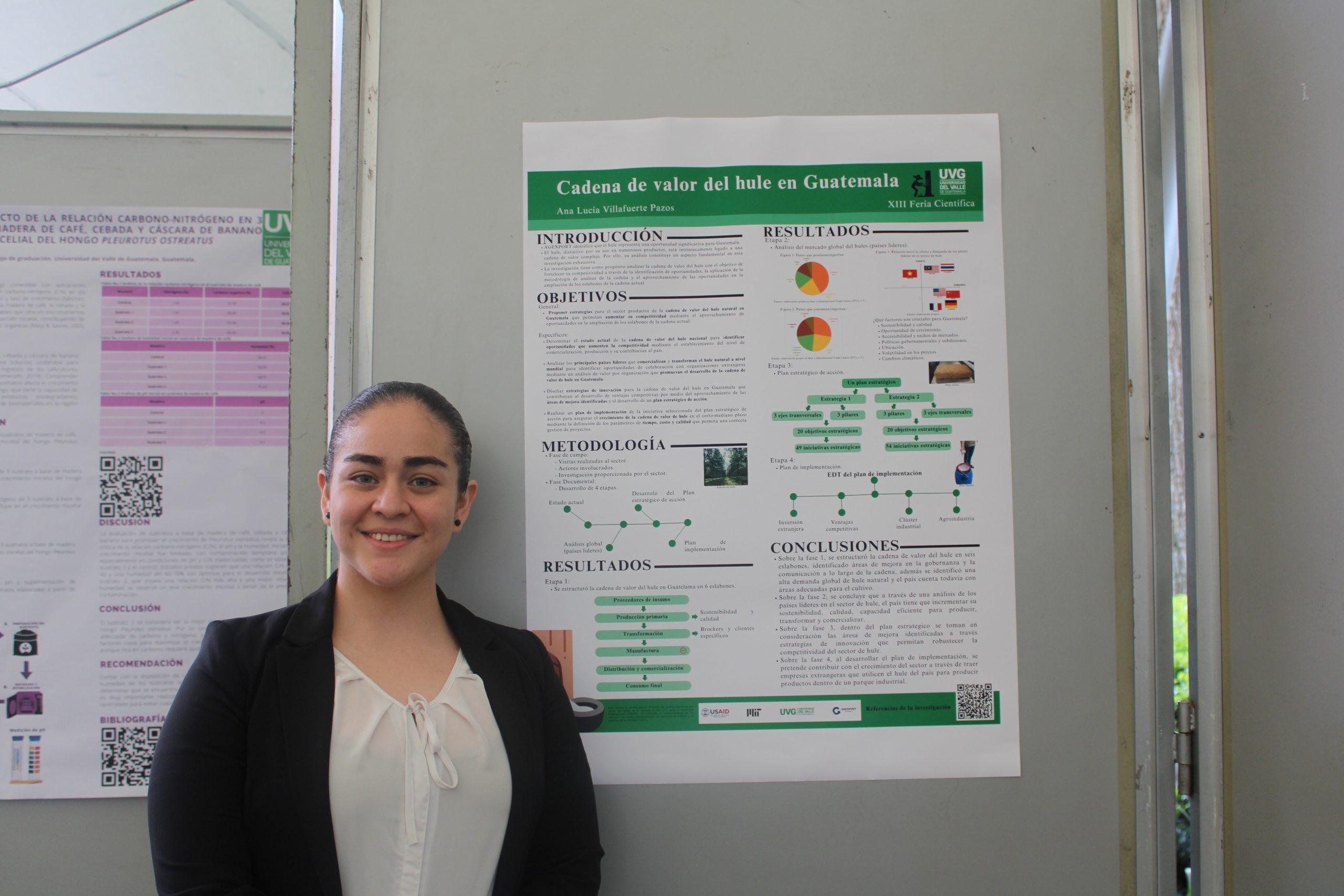
Ana Lucía Villafuerte Pazos, a senior Industrial Engineering student at Universidad del Valle de Guatemala (UVG), completed a comprehensive study on strategy proposals to strengthen the production and processing sector of Guatemala’s natural rubber value chain. Her research, conducted with the support of the ASPIRE Project and in collaboration with the Rubber Committee of the Guatemalan Exporters Association (AGEXPORT), aimed to identify strategies to unlock the sector’s potential. Ana Lucía’s work earned her first place in the thesis category at the UVG Science Fair, where she presented her findings through a scientific poster.
Innovating the Rubber Value Chain
Francisco Del Cid, a researcher with the ASPIRE Project and advisor for Ana Lucía’s thesis, explained that most of the natural rubber produced in Guatemala is currently exported. This leaves untapped opportunities to create value-added products derived from this material within the country.
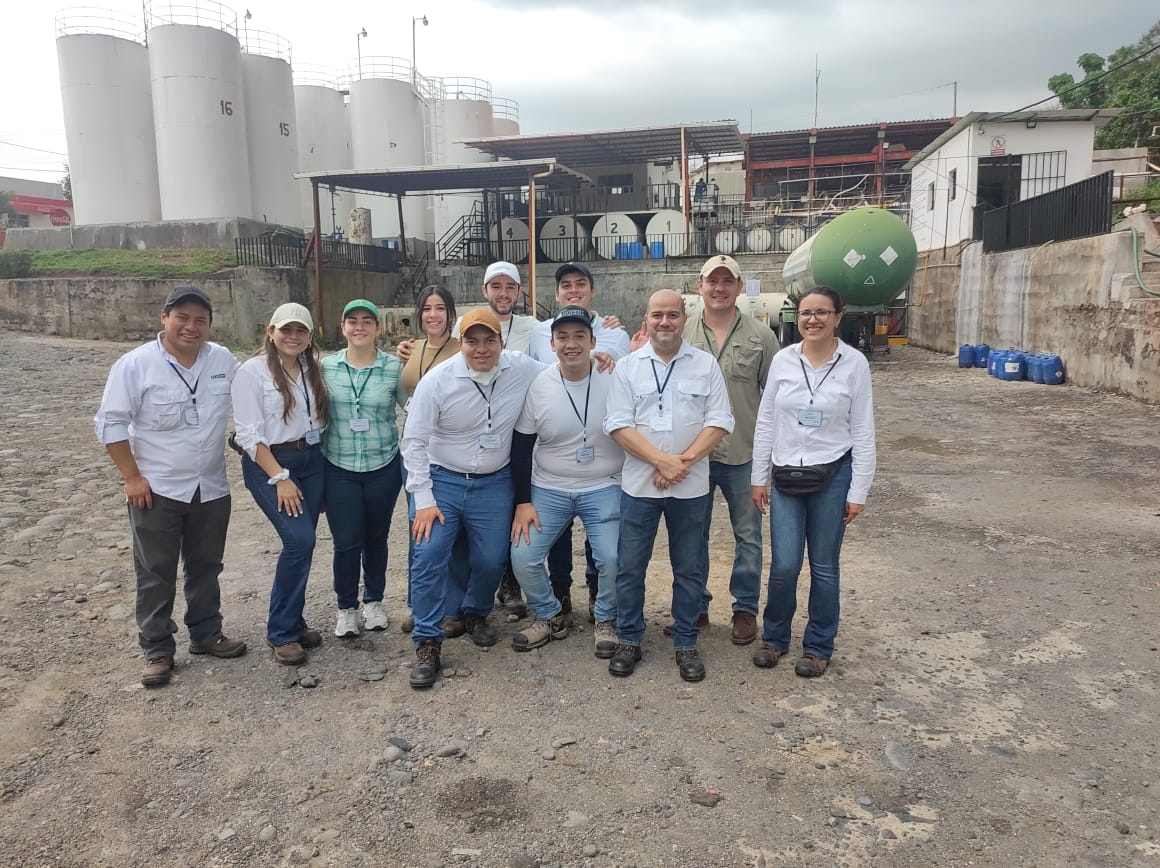
Ana Lucía Villafuerte (second from left) and Francisco Del Cid (third from right) in the field visit to a rubber factory, Entre Ríos Farm. Image: ASPIRE
Through her research, Ana Lucía analyzed the natural rubber value chain to identify ways to transform raw material into finished products while proposing strategies for innovation. She developed 103 strategic initiatives focused on three key goals: improving marketing capacity, opening new markets, and increasing sustainable production. Among these, a priority initiative was selected—the creation of an implementation plan to manufacture rubber-derived products. This plan incorporates essential components such as attracting foreign investment, leveraging competitive advantages, fostering the development of an industrial cluster, and promoting growth in the agro-industry.
Gerardo Rosado, ASPIRE Project Coordinator at AGEXPORT, emphasized the significance of Ana Lucía’s work, stating:
“Her thesis will help us better understand specific links in the value chain that could represent opportunities for stakeholders in the natural rubber sector.”
Overcoming Challenges in Research
Ana Lucía faced several challenges throughout her project, the most significant being how to project a clear vision for the rubber sector while aligning with the committee’s expectations. To tackle this, she immersed herself in the topic early and thoroughly. Her collaboration with AGEXPORT’s Rubber Committee provided additional insights and resources that helped advance her project.
Reflecting on her experience, Ana Lucía encouraged future researchers to “plan their time well” to manage the demands of a research project effectively. She also noted that being “flexible and open to adjusting timelines” was crucial for navigating challenges. However, she emphasized that above all, “staying consistent and not giving up” is key to making progress and achieving results.
Lessons Learned and a Vision for Guatemala’s Rubber Industry
Ana Lucía highlighted that her biggest takeaway was learning to step out of her comfort zone. “Not being afraid to leave my comfort zone helped me put my skills into practice and develop new abilities,” she shared, adding that these lessons will serve her well in her professional life.
Finally, Ana Lucía underscored Guatemala’s untapped potential in natural rubber production. She pointed out that only 1.5% of the country’s rubber is currently processed domestically, leaving a vast opportunity for growth. Developing this value chain strategically, she noted, could significantly strengthen the national economy.
About ASPIRE
The Achieving Sustainable Partnerships for Innovation, Research and Entrepreneurship (ASPIRE) Project is a five-year, $15 million project funded by USAID and implemented by the Massachusetts Institute of Technology (MIT), Universidad del Valle de Guatemala (UVG), and the Guatemalan Exporters Association (AGEXPORT), with the goal of creating a world-class replicable model for how universities, in collaboration with the private sector, government, and local communities, can respond to local and regional development needs.