
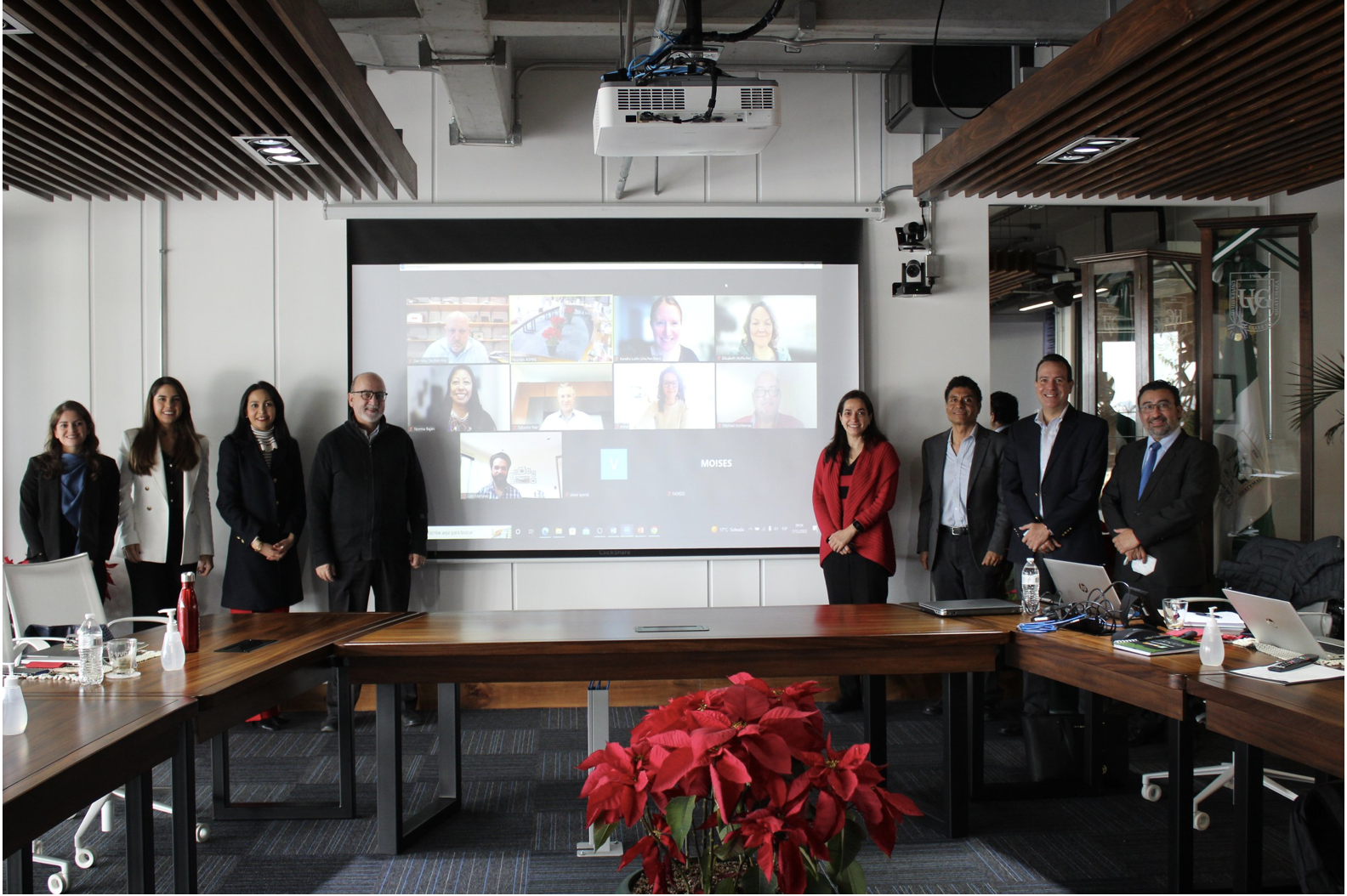
ASPIRE Advisory Board meets to provide multi-sectoral input
Date:
December 13, 2022
Date:
December 13, 2022
By: Alison Young
On December 7, a second meeting of the Advisory Board of the ASPIRE Project was held in early December, 2022. Representatives from academia, the private sector, the public sector, and other stakeholder groups in Guatemala discussed the project’s advances and provided their unique perspectives on the future of this work.
During this session, Elizabeth Hoffecker and Kendra Leith, both MIT Co-Principal Investigators for ASPIRE, presented diagnostics to illustrate work being done in the ASPIRE Project’s major objectives. Additionally, Hoffecker and Leith discussed UVG’s current academic curriculum related to entrepreneurship within the project. They went on to share information about potential opportunities for linkages between academic and industry sectors and ways in which this collaboration will strengthen ASPIRE’s work in 2023. An example of key insights that were shared during this meeting include discussion about the inauguration of an Entrepreneurship Center at UVG. The purpose of this Center would be to create a synergistic relationship between ASPIRE’s various activities and the efforts that are being taken to engage with stakeholders across sectors.
During the meeting, Ana Lucia Solano, ASPIRE’s Research Coordinator, also delivered a presentation on the advances made in the project’s collaborative research objective. During her presentation, Solano highlighted the importance of the objective’s main goal, strengthening researchers’ capacity to produce high-quality findings that will address national development priorities. The research that is being conducted will support local innovation processes within UVG and Guatemala as a whole. Solano highlighted that the development of multidisciplinary projects in ASPIRE’s six value sectors (cardamom, snow peas, essential oils, aquaculture and shrimp, avocado, and sustainable tourism), which were prioritized by AGEXPORT, will be a valuable next step to the previous planning stages which took place in ASPIRE year 1.
Advisory Board members agreed on the necessity of continued generation of relevant projects that link all the actors of the entrepreneurship ecosystem and the productive sectors in ways that will extend beyond the academic sphere. They also stressed the importance of considering and reflecting on local issues such as road infrastructure, regulations, and education while addressing previously identified topics. The Advisory Board provided suggestions to the ASPIRE team with a goal of supporting the successful progression of this project toward its goals and milestones. It was stated during the meeting that ASPIRE may continue to see success and progress in its work by remaining focused on its future and the implementation of relevant applications of knowledge and innovation to positively impact local communities.
Finally, the Board agreed on the importance of collaboration with the public sector when developing and implementing initiatives within the project. By approaching ASPIRE’s work in this way, the information and data generated can be used more effectively to create well-rounded and inclusive solutions that can inform decision making and policy for the country.
About the ASPIRE Project
ASPIRE is a five-year, $15 million project funded by USAID and implemented by the Massachusetts Institute of Technology (MIT), Universidad del Valle de Guatemala (UVG) and the Guatemalan Exporters Association (AGEXPORT). The goal of the project is to create a world-class, replicable model for how Latin American universities and their collaborators can respond to local and regional development needs. The project implements a collaborative approach to research, teaching, innovation, entrepreneurship and tech transfer, based on the combination of local assets and knowledge with MIT’s experience in the innovation ecosystem.