
ASPIRE: TRAINING OBJECTIVE
Date:
December 16, 2022
Date:
December 16, 2022
By: Alison Young
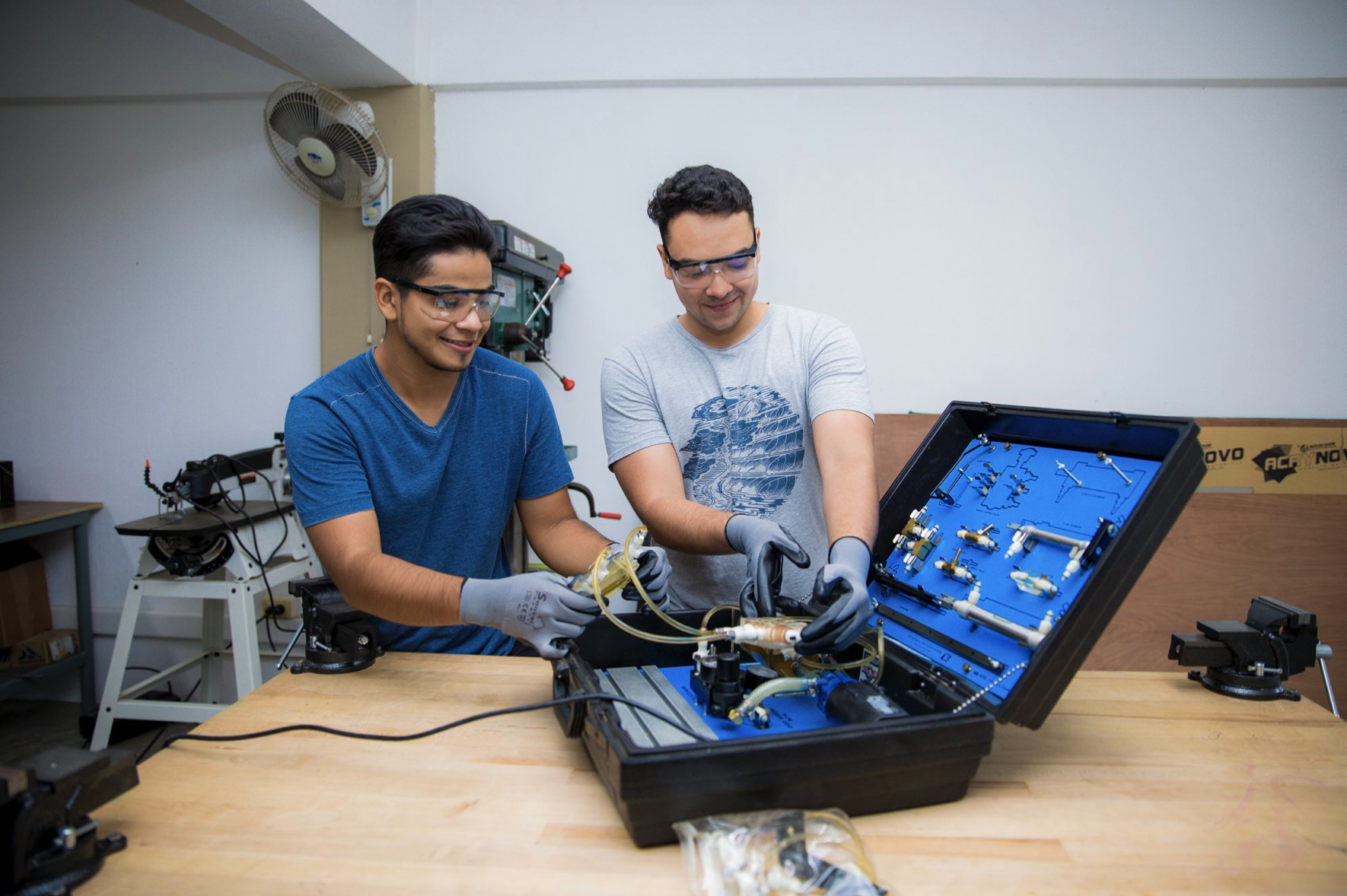
As our first year comes to a close, we would like to recap the advancements we have made toward the project’s first objective – training. ASPIRE’s approach to exchanging relevant education and information for training is meant to ensure that all training experiences and materials support the development of a replicable world-class model for how higher education institutions and their collaborators in the private sector, government, and local communities can address local and regional development challenges together.
As part of this objective, we seek to build capacities of UVG and MIT faculty, researchers, and staff to provide world-class training in the generation and use of research and innovation for development.
Essential to the success of this objective was introducing instructors, AGEXPORT members, and community liaisons to the basic methods and mindsets of participatory design. Participatory design (PD) is a family of design approaches that actively involves the people facing a challenge in the process of developing a solution to it. Through the participatory design process, designers engage users at different levels as collaborators, rather than passive recipients of a solution. The three main types of participatory design include design for users (user-centered design), design with users (co-design), and design by users (user-generated design).
During its first year, ASPIRE, in collaboration with Link4, a Guatemalan design education organization with significant experience in cross-cultural design facilitation and community development, planned and executed a total of 5 pilot workshops focused on building linkages between UVG researchers and AGEXPORT members, understanding challenges in certain Guatemalan export value chains, and generating ideas for collaborative research projects that could benefit traditionally marginalized groups and others in the value chain.
In addition to these workshops, ASPIRE successfully facilitated a diverse list of sessions and experiences for UVG instructors, students, and ASPIRE staff. Among these offerings were monthly Learning Exchanges at UVG, six Faculty Training sessions, two PD applications workshops for instructors, one PD workshop for visiting students, travel opportunities for UVG’s academic community (students, faculty, and staff) to visit MIT, and the MIT team’s subsequent travel to visit UVG’s campus.
Sher Vogel, the Global Trainings Manager at MIT D-Lab and technical advisor to the UVG Curriculum and Trainings Manager for ASPIRE, stated that “one achievement to celebrate this year is that Participatory Design has become a familiar framework for instructors, researchers, and some AGEXPORT members. In our workshops, participants have mentioned they appreciated the participatory methods and valued working with different perspectives present at the table. In addition, ASPIRE’s project team has developed a deeper level of understanding of at least two different agricultural community contexts. These relationships and ways of working will be foundational as we move forward together, learning how to do collaborative research projects that include and produce value for traditionally marginalized communities.”
During the project’s first year, the ASPIRE team planned to reach and positively impact 100 stakeholders through training sessions. These expectations were exceeded, as ASPIRE successfully engaged with 306 participants throughout our various training offerings.
While the high number is a great thing, the team recognizes the long-term value of s training more deeply on a variety of competencies and skills that will help strengthen the inclusive innovation ecosystem in the longer term. To achieve this, the ASPIRE trainings team will build different training tracks for different key groups to help the ecosystem flourish, with a focus on selected researchers, instructors, community liaisons, and ASPIRE staff.
About the ASPIRE Project
ASPIRE is a five-year, $15 million project funded by USAID and implemented by the Massachusetts Institute of Technology (MIT), Universidad del Valle de Guatemala (UVG), and the Guatemalan Exporters Association (AGEXPORT). The goal of the project is to create a world-class, replicable model for how Latin American universities and their collaborators can respond to local and regional development needs. The project implements a collaborative approach to research, teaching, innovation, entrepreneurship, and tech transfer, based on the combination of local assets and knowledge with MIT’s experience in the innovation ecosystem.