
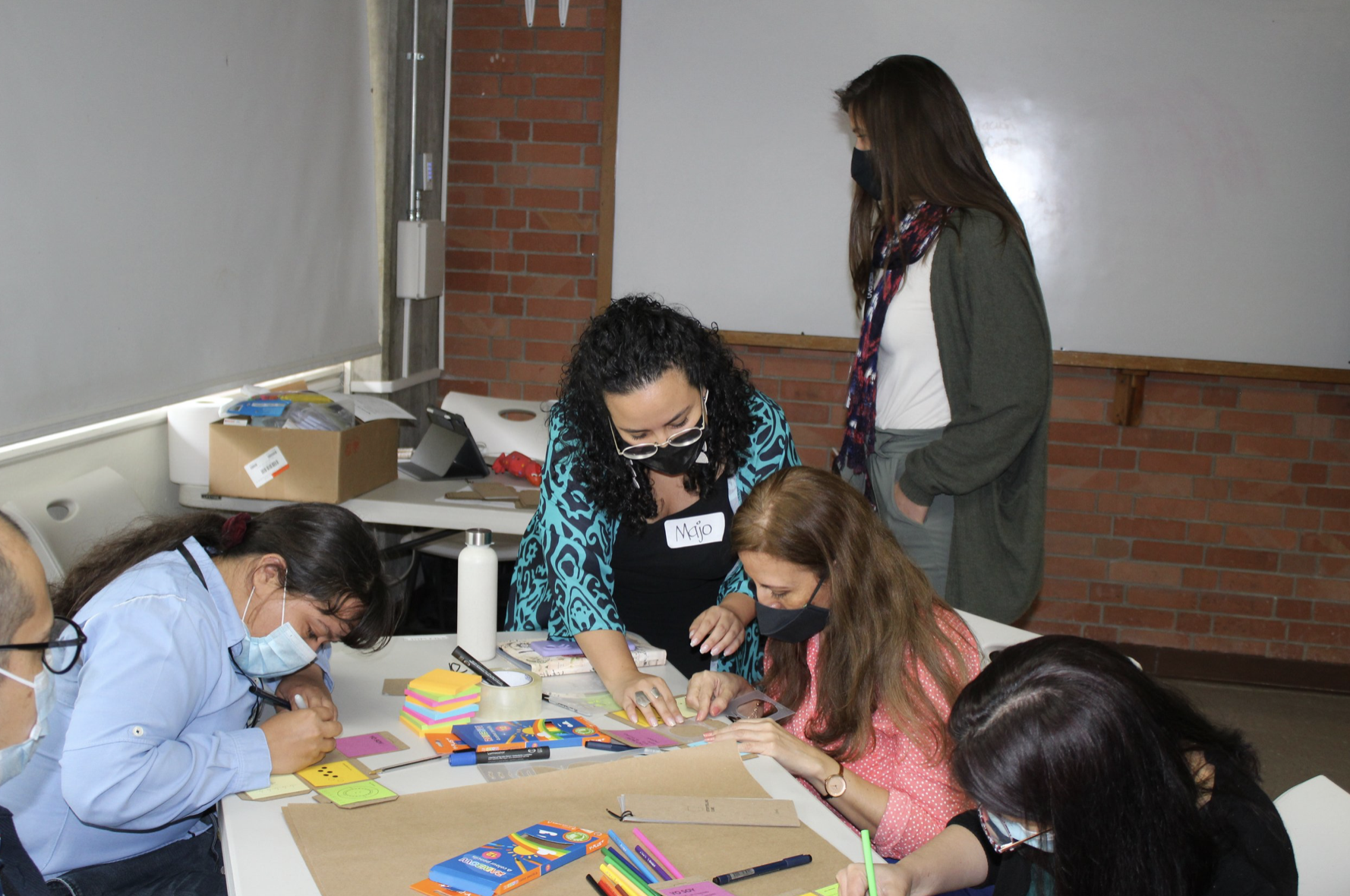
ASPIRE trains UVG instructors on methods to frame problems for community-student class projects
Date:
September 19, 2022
Date:
September 19, 2022
By: Alison Young
On Friday, September 16th, the Achieving Sustainable Alliances for Innovation, Research and Entrepreneurship (ASPIRE) Project held a training on methods to frame problems for class projects between communities and students, in which teachers from the Universidad del Valle de Guatemala (UVG) participated during their annual Teacher Training Week. The session was facilitated by Diana Duarte, Co-Director of Diversa, a Colombia-based organization that works on topics of the co-creation and nexus between communities, teachers, and students, and participates as an ASPIRE project collaborator.
Ms. Duarte began the session by offering participants a working definition of the concept of framing: A process by which one can affirm the framework – or window – through which a particular situation or reality is understood. She added that the chosen framing creates a path the person or group can follow to conduct more in-depth research, which subsequently leads to the creation of a solution and the development of new or improved products and/or services in the collaborating community or territory.
Ms. Duarte indicated that it is essential for instructors to take into consideration the following points when framing for class projects with communities and students:
1. Identify the priority theme(s) of the subject to be addressed by the community/students
2. Confirm its relevance to the overall subject matter of the class
3. Ascertain the capacity of the students to effectively engage the priority theme with communities
4. Assess available resources to dedicate to the endeavor
Ms. Duarte also emphasized these essential points during the session:
1. Realistic expectations: The 4-part framing described above will enable communities and students to generate realistic expectations about the project and its anticipated outcomes
2. Value Added: As framing leads to proposed solutions and project identification, instructors should seek to ensure that the class project adds value for both communities and students
3. Participatory Design (PD): Whether instructors choose to use the framing technique only at the beginning, or they use it throughout the class project, they are encouraged to incorporate PD concepts throughout, that is, consulting, validating, and deciding in collaboration with students and community members.
This training responds to one of the main objectives of ASPIRE, which seeks to build the capacities of UVG teachers, researchers, and staff to provide world-class training in the generation and use of research and innovation for development.
About the ASPIRE Project
The Achieving Sustainable Partnerships for Innovation, Research and Entrepreneurship (ASPIRE) Project is a five-year, $15 million project funded by USAID and implemented by the Massachusetts Institute of Technology (MIT), Universidad del Valle de Guatemala (UVG) and the Guatemalan Exporters Association (AGEXPORT). The goal of the project is to create a world-class, replicable model for how Latin American universities and their collaborators can respond to local and regional development needs. The project implements a collaborative approach to research, teaching, innovation, entrepreneurship and tech transfer, based on the combination of local assets and knowledge with MIT’s experience in the innovation ecosystem.