
Developing an Educational Game to Support Avocado Producers
Date:
May 22, 2024
Date:
May 22, 2024
By: Bianca Contreras
Avocado production and export are among Guatemala’s most promising sectors. However, ASPIRE project researchers and collaborators have identified a gap in knowledge and application of good post-harvest practices for small producers. The team addressed this challenge by developing an educational toolkit to support the technical and practical training of people who harvest and handle avocados. After researching avocado production, the team decided to use a board game to teach financial planning, as they found it to be a more practical and effective tool than traditional manuals for teaching the planning and financial aspects of avocado production.
The game “Don Güicho’s Orchard” (La Parcela de Don Güicho) teaches avocado producers about financial management and production concepts in an interactive and dynamic way. In this immersive board game, each team takes on the role of the protagonist, “Don Güicho,” and makes decisions for him. Teams compete against each other to simulate steps in agricultural practices. The team with the highest accumulated profits, the greatest asset investment, and the least debt wins. To keep track of the winner, each team practices financial management using a “game booklet” that includes balancing a budget, managing cash flow, creating an income statement, and maintaining a production control table. Players can enjoy the game in a low-pressure setting and take breaks as needed. Based on real-world applications, the accessible game board can be employed by a wide audience and is an enjoyable way to learn.
-
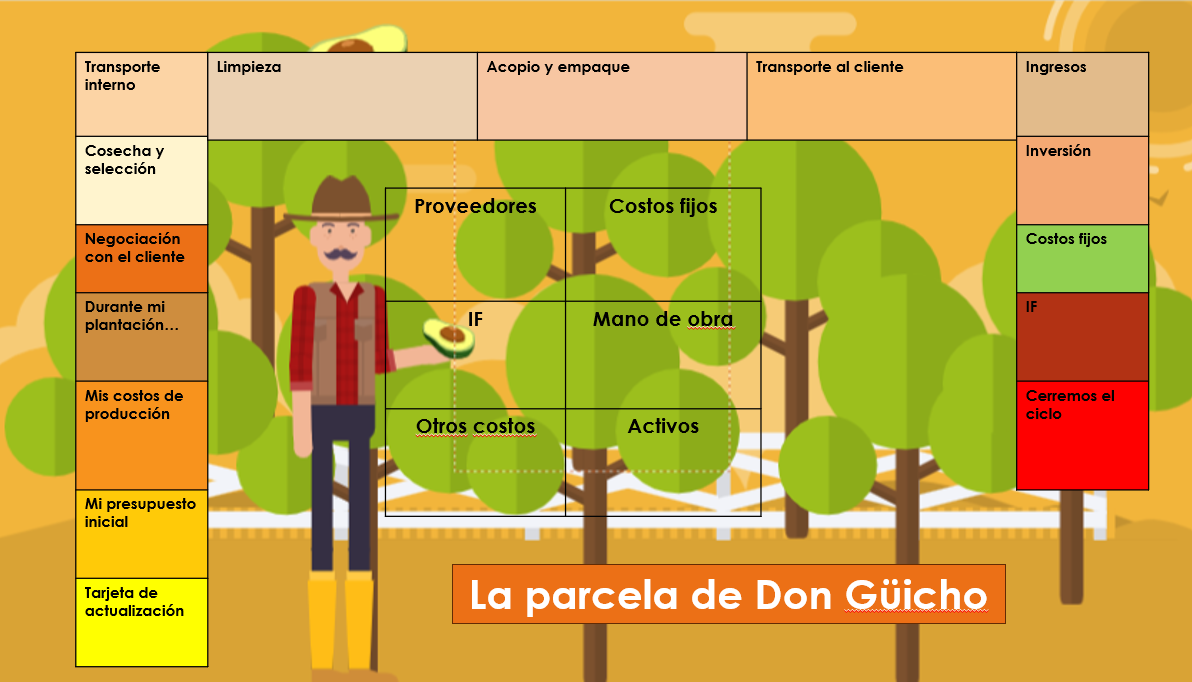
The boardgame “Don Guicho’s Orchard.” Photo: ASPIRE
- Why avocado production?
Guatemala is a country with ideal conditions for growing avocados. About 80% of the avocados grown in the country are sold locally, while the remaining 20% is exported to European and Central American countries. Growth is essential for any economy, and implementing innovative strategies to increase production raises important questions: What factors limit productivity? What strategies could be implemented to increase quality production? How can we improve knowledge and application of good post-harvest practices for small producers?
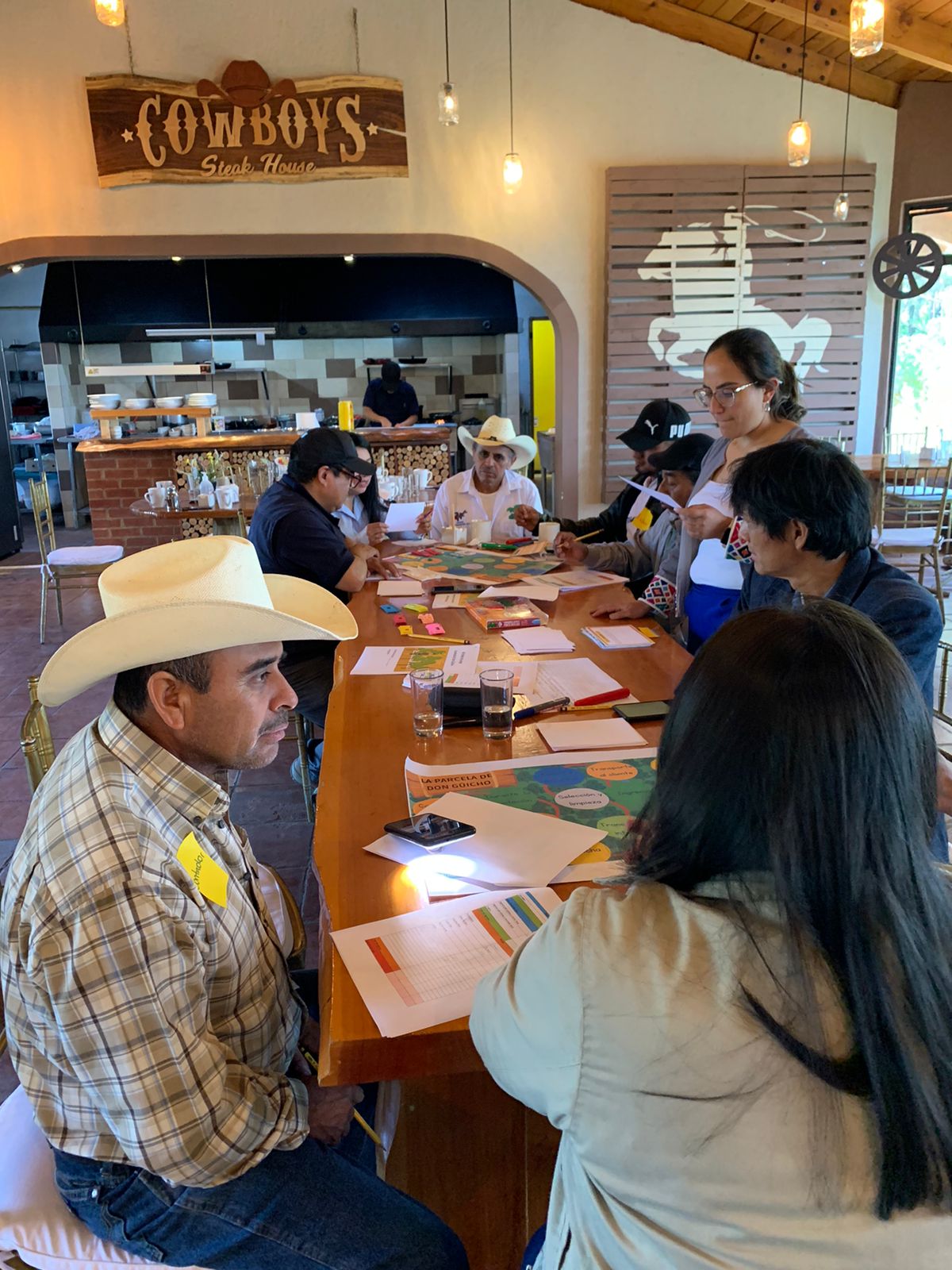
Testing of the board game with avocado producers. Photo: ASPIRE
The design process
This proposal was co-created by researchers from Universidad del Valle de Guatemala (UVG) and technicians from the Ministry of Agriculture – DIFOPROCO. The team included Ana Alicia Paz (UVG) as principal researcher, Ana Silvia Colmenares as food technology researcher, Cinthya Alvarado (UVG) as educational researcher, Julio Castro and the team of technicians from the Ministry of Agriculture – DIFOPROCO, Román Molina (Frutesa), and Adilia Blandón as the ASPIRE project researcher.
The team conducted actor mapping to identify and include all stakeholders in the toolkit’s design process. Key actors in the design process were identified, and included AGEXPORT, private sector companies, the Ministry of Agriculture (MAGA), and Cooperatives (small and medium producers). A co-creation process was planned, where these key actors would assist the researchers in designing and implementing solutions.
Researchers and stakeholders then participated in a collaborative assessment; technicians from the Strengthening for Productive Organization and Marketing Direction (DIFOPROCO) at MAGA were included. These technicians have established relationships with avocado producers through monthly training visits, and were able to involve this trusted network of farmers in the ASPIRE initiative. Both the technicians and producers participated and provided valuable insight. One activity involved identifying producers’ needs, such as ensuring digital tools are accessible on their phones, with or without active Internet. Another exercise helped prioritize their challenges, highlighting the need for training on financial issues. Involving key stakeholders like the MAGA technicians proved invaluable, as they contributed important strategies they have adapted in training farmers. For instance, the technicians mentioned that they traveled on motorbikes to reach farmers, thus highlighting the need for training tools to be compact, mobile, and waterproof.
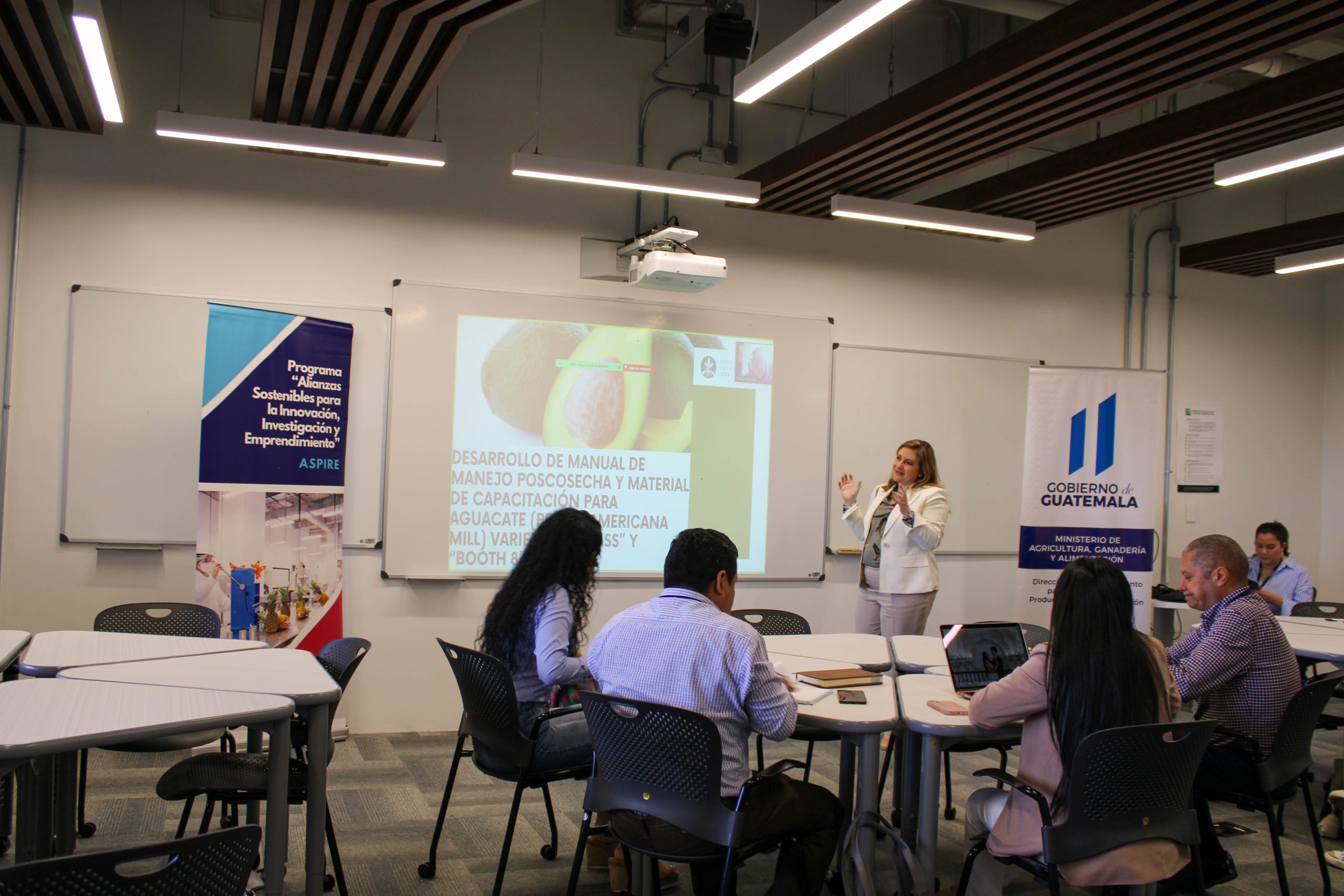
An additional brainstorming session was held with MAGA members, where the group agreed that the new material should be based on the real-life challenges of avocado producers. The goal was to allow users to independently and dynamically engage with the product. Additional recommendations included implementing engaging videos and artwork that were easy to share and ensuring the end product was interactive. The need for a diploma or recognition upon completion of the training was also identified.Based on the group’s research, a curriculum and educational tools were developed, which included the educational board game. The game was initially tested by the fifth-year students of Food Engineering at UVG and an avocado producer; then, with MAGA technicians; finally, the game was successfully tested with avocado producers and MAGA technicians.
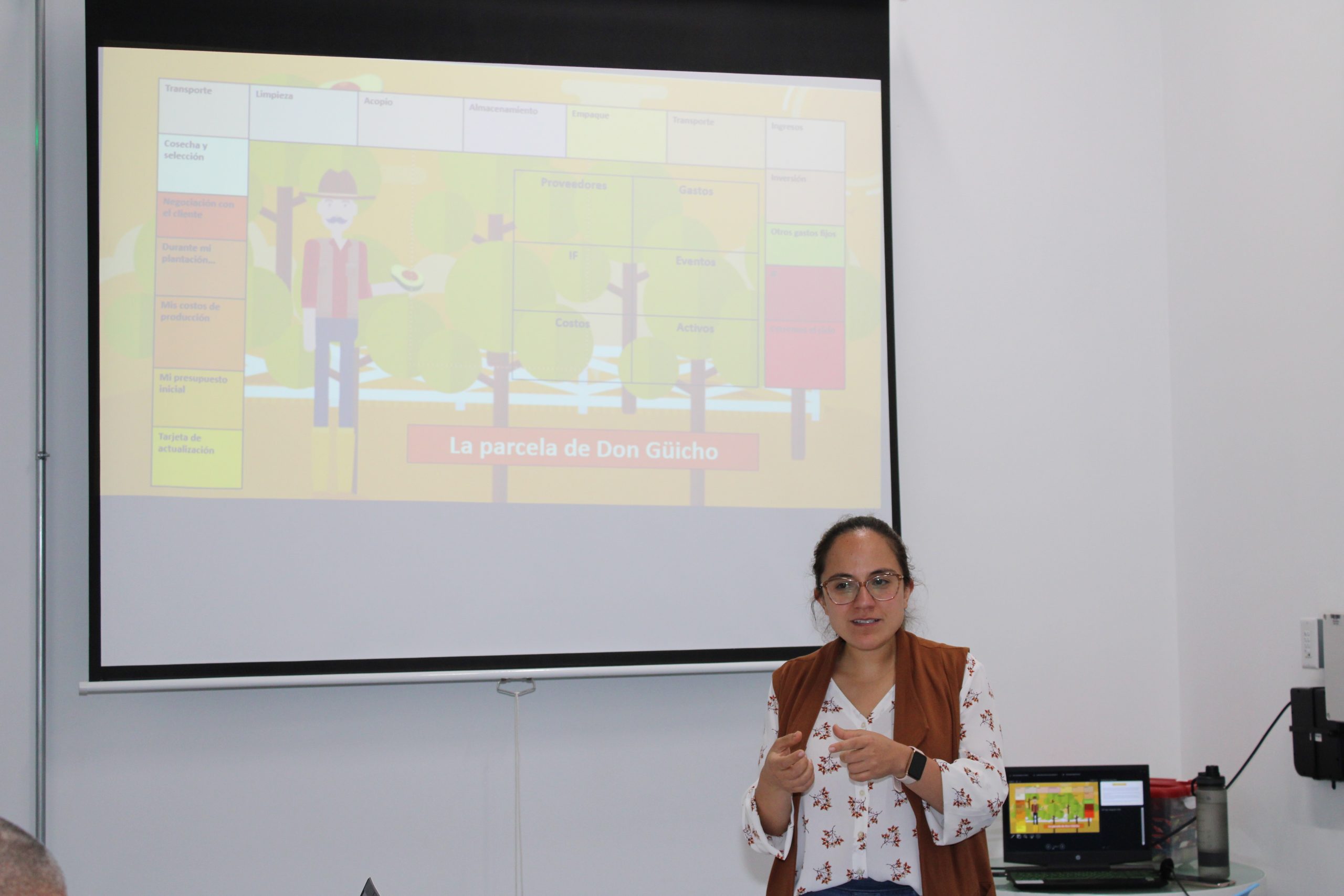
Cinthya Alvarado, educational researcher, during the testing process of the board game with the Ministry of Agriculture. Photo: ASPIRE
Conclusion
Through multi-sectoral cooperation, ASPIRE helped create an innovative training toolkit for avocado producers in Guatemala. As part of this new resource, “Don Güicho’s Orchard” provides financial training that has the potential to improve an avocado producer’s income and livelihood in a fun, non-formal way. ASPIRE expects the game to be a fun educational tool for producers learning the financial management of avocado production in Guatemala.
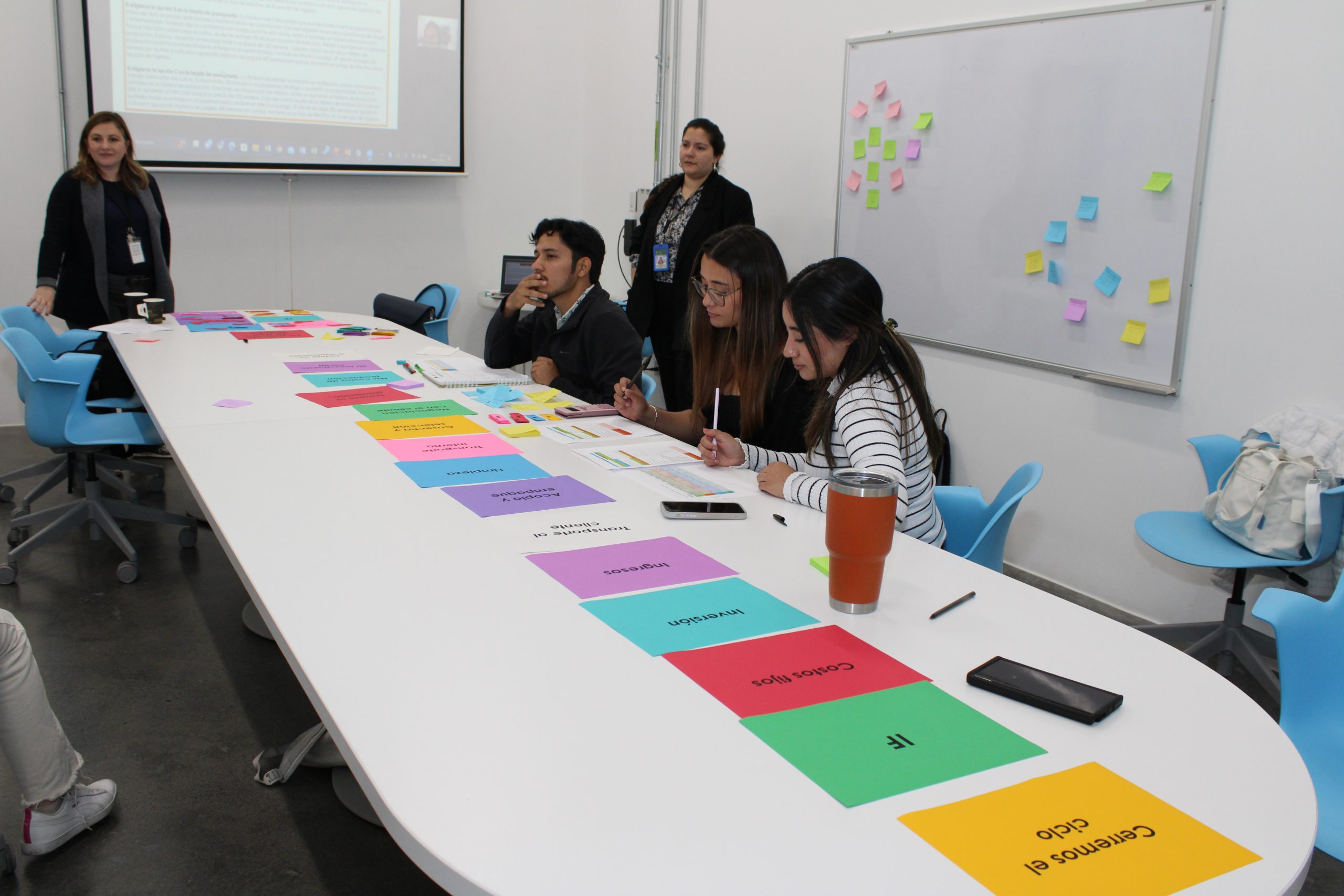
First testing of the game with students. Photo: ASPIRE
About ASPIRE
ASPIRE is a five-year project funded by USAID and implemented by the Massachusetts Institute of Technology (MIT), Universidad del Valle de Guatemala (UVG), and the Guatemalan Exporters Association (AGEXPORT), with the goal of creating a world-class replicable model for how Latin American universities, in collaboration with the private sector, government, and local communities, can respond to local and regional development needs
- Why avocado production?