
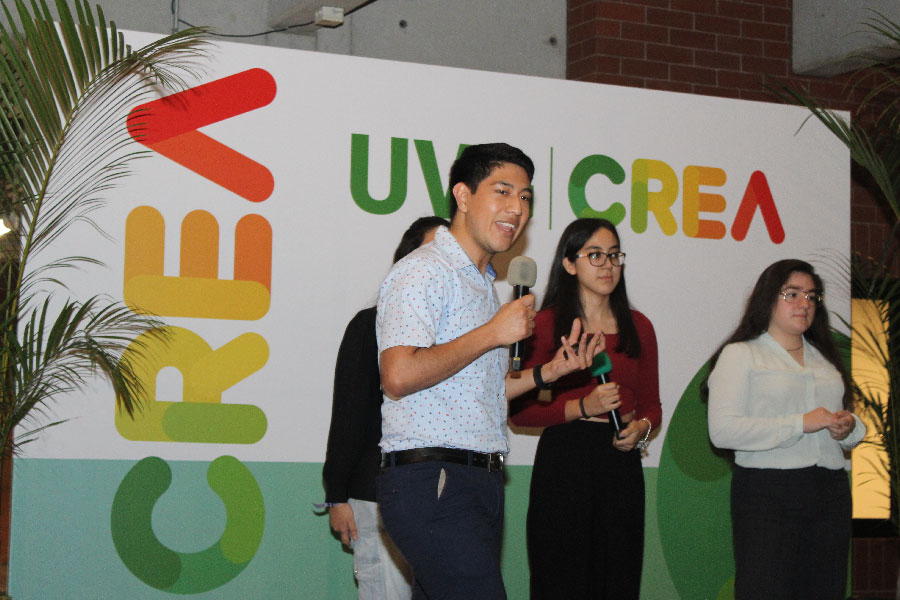
Pitchapalooza: Celebrating connections and entrepreneurship
Date:
June 25, 2024
Date:
June 25, 2024
By: José Barillas
The night of Pitchapalooza 2024 was brimful of creativity, passion, and the entrepreneurial spirit of the Universidad del Valle de Guatemala’s (UVG) students. Convening at the Plaza Isabel Gutiérrez de Bosch, participants unveiled innovative business proposals developed in their Entrepreneurship and Innovation course. This event, organized by the ASPIRE project, stood out as a platform for fostering business connections and catalyzing growth.
Professors from the concluding Entrepreneurship and Innovation course selected six ventures to participate in the event. Each team presented their business proposal in a four-minute pitch to compete for recognition as the best business proposal at the festival. A panel of expert judges in innovation and entrepreneurship evaluated each project, including Lourdes Figueroa from the ASPIRE Project, Isabel Montes from “Doñitas Rellenas,” Plubio Monterroso, Director of the Entrepreneurship Center of the Rafael Landivar University, Lucy Futch from “Lo Quiero en Guate,” and Andrea Muñoz from Alterna.
-
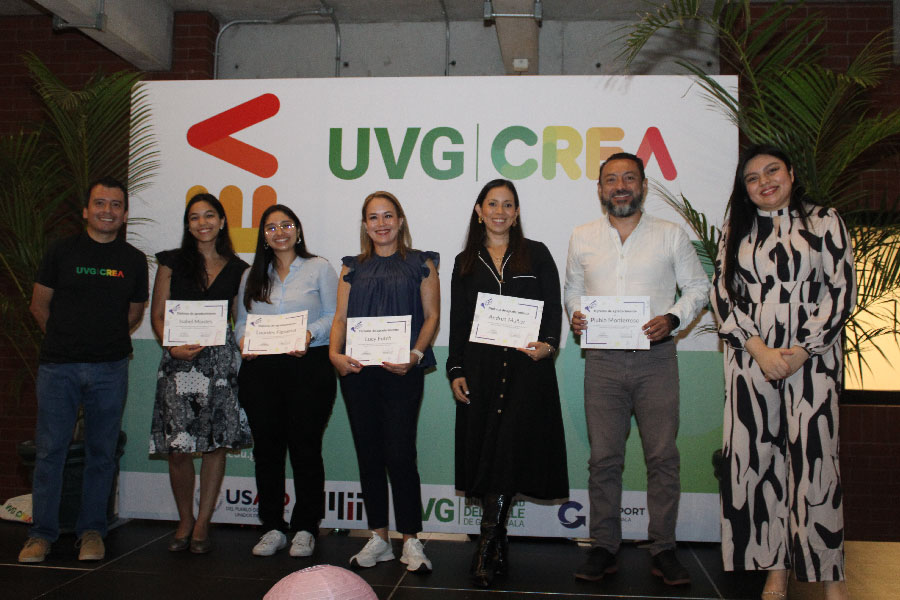
Judges being recognized for their participation in Pitchapalooza. Photo: ASPIRE
And the winner is…
The judging panel chose the Ocean Guard project as the winning initiative. The project aims to address the widespread problem of red tides, which have had a significant negative impact in coastal areas like Guatemala and many other parts of the world, affecting people’s health and quality of life.
Ocean Guard presents an innovative solution: a test for detecting infections caused by dinoflagellates, the organisms responsible for red tides. This test has become increasingly important when regions are affected by heat waves and droughts. These climate changes contribute to the proliferation of harmful algal blooms on coasts, commonly known as red tides.
Ocean Guard offers an immediate and accessible test that does not require specialized laboratories or complex protocols. This innovative test enables rapid detection to inform and thus empower the prevention of potential infections. This safety measure is a critical tool for coastal communities’ public health and well-being, preventing illness from red tide.
The winner embodied the role of an entrepreneur, conveying his business idea and translating technical concepts into easily understandable business language, which significantly contributed to his success.
Franz Forkel, a member of the winning group, remarked that participating in Pitchapalooza was a wonderful opportunity. For Forkel, the festival served as an incentive to believe in his entrepreneurial ideas: “The course had a great impact on me; being a science student, it ultimately empowered me to truly appreciate that my ideas are good, that I can take them to the business world, and that I can be an entrepreneur.”
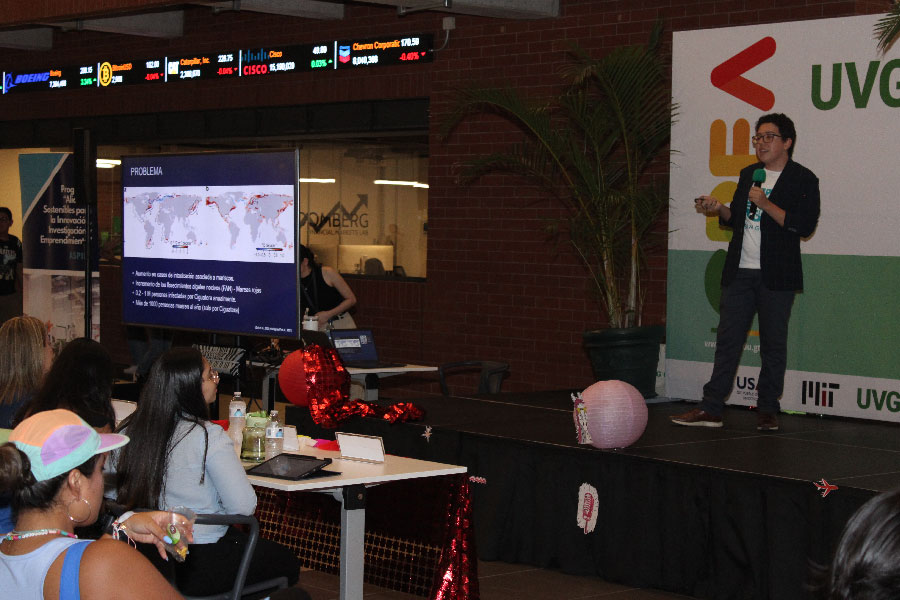
Student presenting the Ocean Guard venture, an innovative test for detecting infections caused by dinoflagellates, the organisms responsible for red tides. Photo: ASPIRE
Second place
The innovative project FreshFare won second place at the festival. It aims to address the problem of surplus food in restaurants by making it available for purchase at reduced prices. Recognizing the region’s high potential, Fanfare operates via a mobile phone app that connects consumers with participating restaurants.
According to the Food and Agricultural Organization (2023), Latin America is facing an alarming loss of 220 million tons of food, valued at 150 billion dollars. FreshFare aims to address this issue by offering a practical, cost-effective solution for those seeking alternative, affordable food options.
This innovative concept promotes sustainability and offers a scalable and profitable business model for the Latin American market. For each transaction made through its application, the restaurant earns a commission, a profitable opportunity for participating establishments.
Edgar Chen, a member of FreshFare, shared that: “It was an exciting and challenging activity because selling a business idea on stage in front of judges is not easy, but it became a great learning experience, and was an excellent opportunity to apply what we learned during the Entrepreneurship and Innovation course.” Additionally, he mentioned that the ASPIRE project has impacted his professional life. Last year, he enrolled in the CREA Training course, where he had the chance to learn about entrepreneurship and development, crucial skills for the business field.
Promoting entrepreneurship in the ecosystem
The ASPIRE project’s entrepreneurship leadership team shared that two motivated students visited their office after the festivities. Encouraged by their attendance and entrepreneurial spirit at Pitchapalooza, the students were extremely excited and asked how to share their business ideas and present them at the next festival!
The Pitchapalooza Festival proved a unique space where the students’ creativity, passion, and business vision shone. From showcasing innovative projects to recognizing impactful solutions like Ocean Guard and FreshFare, the festival projected the power of entrepreneurship to drive meaningful change in society. As in the case of Franz Forkel, this entrepreneurship training can open doors to a world of possibilities they had not considered before. These experiences strengthen students’ commitment to entrepreneurship and innovation, preparing them to become leaders of change in the future, and seek opportunities to develop and implement their business ideas.
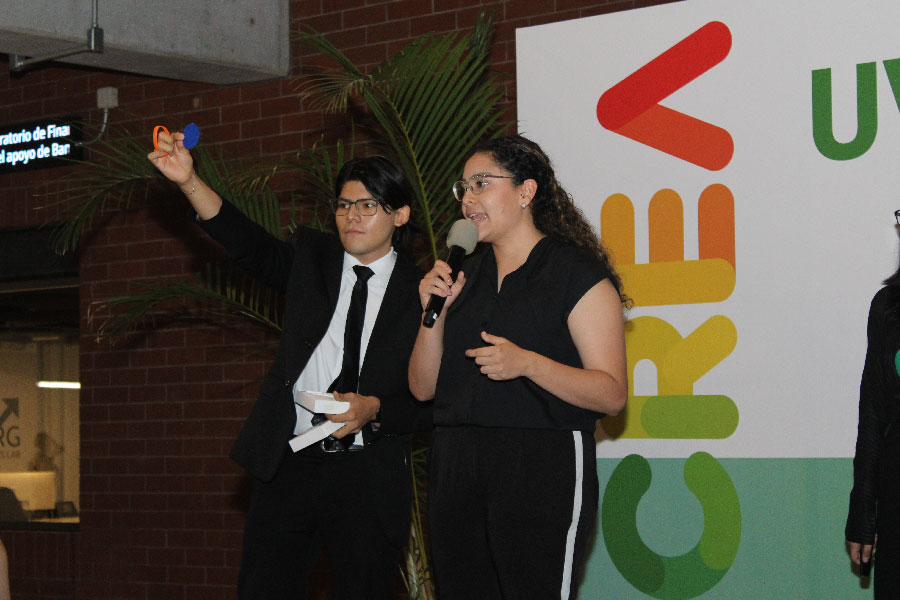
Students discussing entrepreneurship. Photo: ASPIRE
About the ASPIRE project
The Achieving Sustainable Partnerships for Innovation, Research and Entrepreneurship (ASPIRE) Project is a five-year, $15 million project funded by USAID and implemented by the Massachusetts Institute of Technology (MIT), Universidad del Valle de Guatemala (UVG), and the Guatemalan Exporters Association (AGEXPORT), with the goal of creating a world-class replicable model for how universities, in collaboration with the private sector, government, and local communities, can respond to local and regional development needs. The project implements a collaborative approach, based on MIT’s experience in the innovation ecosystem.