

Tejiendo Emprendedores: Empowering Connections and Celebrating Innovation at UVG Altiplano
Date:
December 10, 2024
Date:
December 10, 2024
By: José Barillas
For the very first time, the Tejiendo Emprendedores event was launched at the Altiplano Campus of the Universidad del Valle de Guatemala (UVG). This inaugural day-long gathering, organized by the UVG CREA team as part of the ASPIRE project, introduced a dynamic new platform for students, teachers, researchers, and alumni to explore the entrepreneurial journey. The program featured multiple hour-long sessions where graduates and professionals shared their journey, followed by 30 minutes for Q&A. Between talks, networking opportunities further immersed attendees in conversations about overcoming challenges, embracing failure, and building resilience, gaining a deeper connection and understanding of the challenges and rewards of building a business in their own region.
Three accomplished entrepreneurs shared their stories, illustrating the diversity and creativity within the entrepreneurial landscape.
1. Maritza Puac, a proud UVG Altiplano alumna and indigenous businesswoman, is the co-founder of Cervecería Ixiim. Her journey began with producing cacao liquor and has since evolved into running an artisanal brewery.
2. Adriana Cardona, a UVG Business Administration student, leads Mimi’s, a thriving business specializing in strawberries and cream. She also works on marketing strategies for the Multicolores Association.
3. Pedro Ralón, an agroforestry engineer, founded AVANT Garden, a business offering organic products and gardening training. His expertise in environmental education and agricultural technology has been instrumental in its success.

Student asking a question to the panelists. Image: ASPIRE
Empowering Testimonials
Adriana Cardona of Mimi’s shared:
“This experience was incredibly motivating. A few months ago, I never imagined I’d have the opportunity to share Mimi’s story and how we’ve reached so many people. What stood out to me most was the inspiration and learning from my colleagues. I realized that the fear of making mistakes shouldn’t be an obstacle. Learning means trying, failing, and persevering. I also believe it’s important to create more spaces like this, where other entrepreneurs can see that every project starts from scratch.”
Maritza Puac, co-founder of Cervecería Ixiim, added:
“Participating in the discussion was an experience where I felt safe and supported while sharing my story as an entrepreneur. I hope I was able to inspire more young students to believe in themselves and pursue their dreams.”
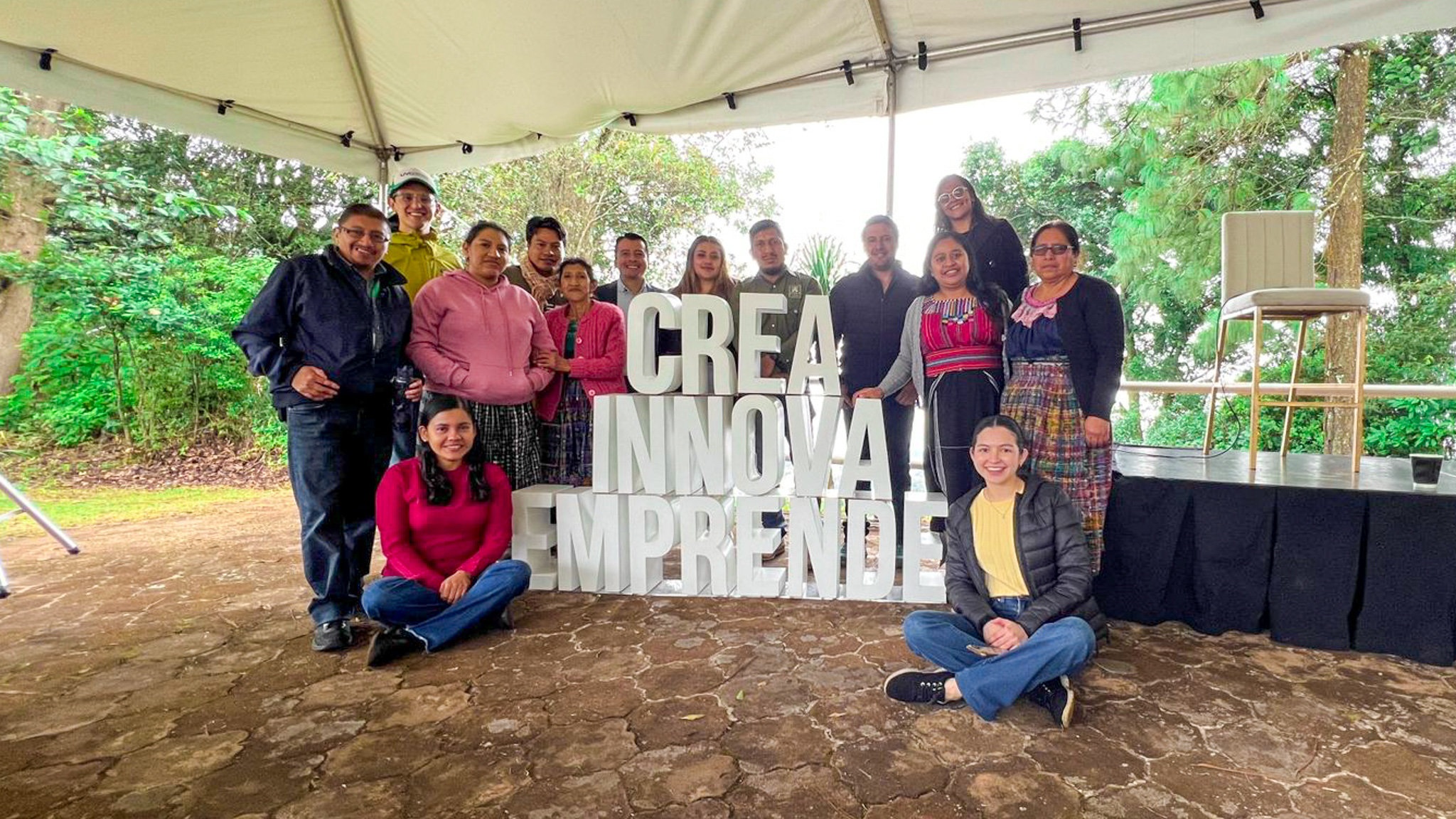
UVG CREA team with entrepreneurs and participants. Image: ASPIRE
Evelyn Mutzutz, a UVG Altiplano student who attended, reflected:
“I found it incredibly valuable. The questions were well thought-out and touched on aspects that really interest us, like getting to know the people behind the ventures. I’m always drawn to events that highlight the human side of entrepreneurship. I also appreciated how the event showcased how their skills and knowledge helped bring their projects to life.”
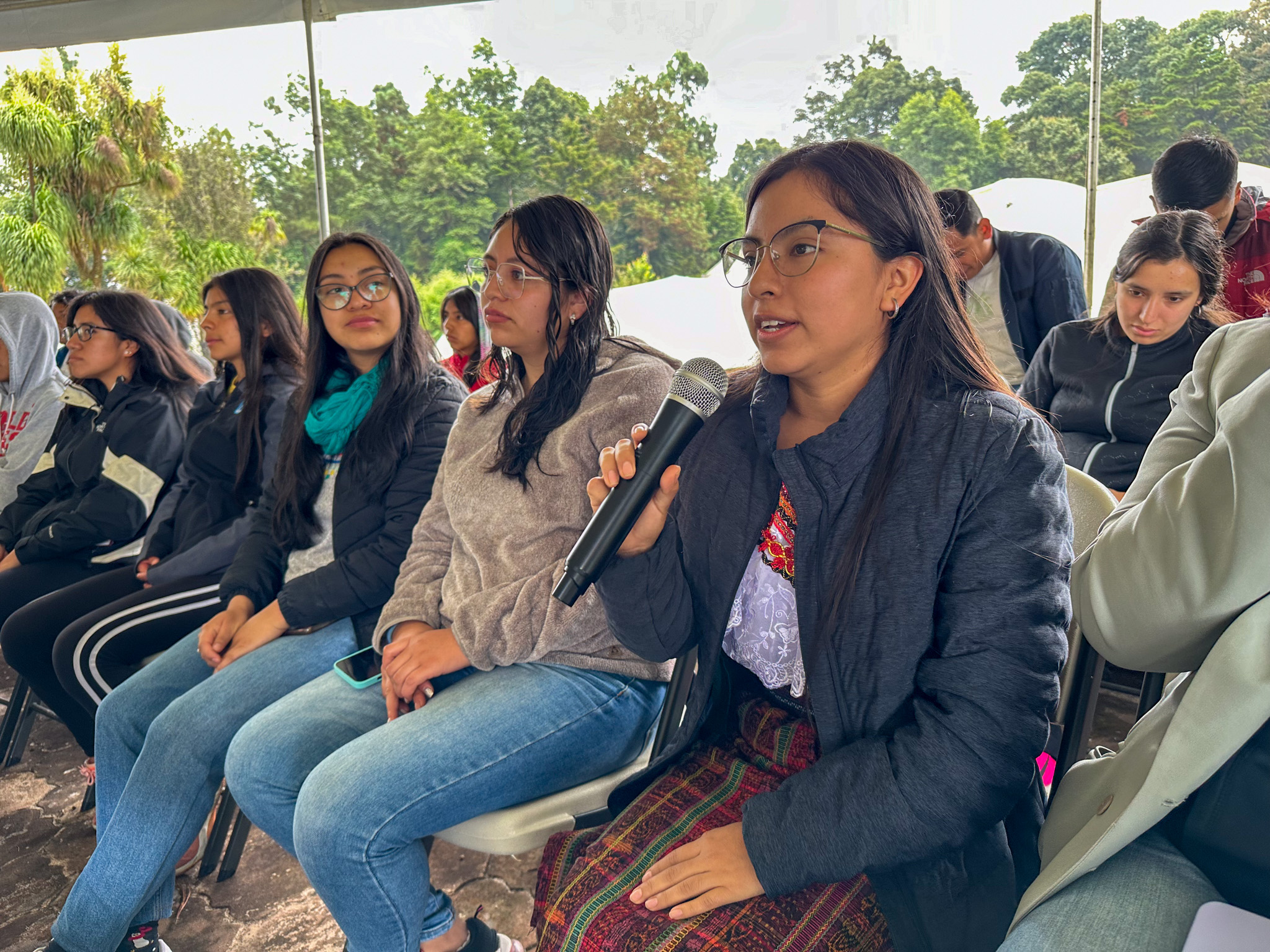
Evelyn Mutzutz participated in the discussion group. Image: ASPIRE
A Community-Driven Future
Tejiendo Emprendedores was more than a series of conversations—it was a space where participants reflected on their own entrepreneurial journeys and explored new possibilities. Through shared stories and connections, participants gained new perspectives on entrepreneurship, seeing it as a pathway that can be strengthened through collaboration and shared experiences. These exchanges fostered a deeper sense of community, mutual inspiration, and motivation. By providing a space for reflection, connection, and dialogue, the event helped build momentum for sustainable growth and future opportunities.
About ASPIRE
The Achieving Sustainable Partnerships for Innovation, Research and Entrepreneurship (ASPIRE) Project is a five-year, $15 million project funded by USAID and implemented by the Massachusetts Institute of Technology (MIT), Universidad del Valle de Guatemala (UVG), and the Guatemalan Exporters Association (AGEXPORT), with the goal of creating a world-class replicable model for how universities, in collaboration with the private sector, government, and local communities, can respond to local and regional development needs. The project implements a collaborative approach, based on MIT’s experience in the innovation ecosystem.