
Year 2 of the ASPIRE Training Program Produces 3 Faculty-led Community Projects in Guatemala
Date:
July 3, 2023
Date:
July 3, 2023
By: Alison Young
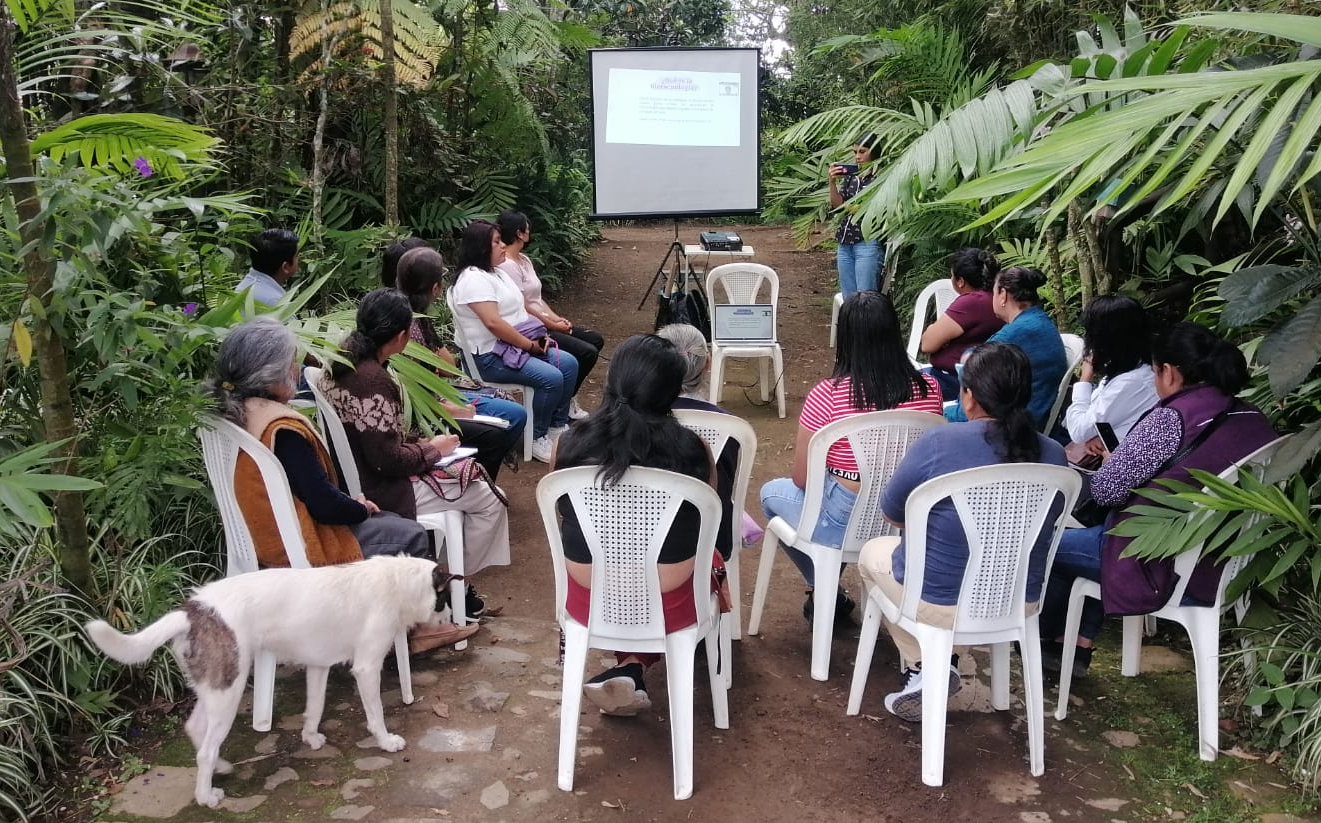
The ASPIRE project’s training objective focuses on strengthening the capacities of Universidad del Valle de Guatemala (UVG)’s professors, researchers, staff, students, community and industry partners by offering an intensive training program for teaching and implementing novel concepts in innovation. One such initiative is the Class Projects with Communities program which is implemented in three phases during an entire academic year. In phases 1 and 2 (January to June), selected UVG faculty learn how to incorporate participatory design practices into one of their existing courses and design the framework for class projects with communities. In phase 3 (July to November), the professors transfer those skills to students, who, in turn, apply them with community members and organizations via the defined class projects. The expected result is that everyone involved has a greater understanding of the importance of strategic, intentional participation by different stakeholders at different times in the project cycle. Community groups are protagonists, particularly in the beginning, when local challenges are identified and framed.
Three UVG faculty members successfully completed phases 1 and 2 of the program in June, and have now entered phase 3 where they will guide students as they implement the class projects with communities which will go through November. The professors completed the first two phases by successfully navigating various capacity strengthening activities between January and June, which included a rigorous set of workshops, mentorship from MIT faculty, and other related topics. With the start of phase 3 in July, students are learning about inclusive innovation and participatory design, as well as starting their projects with communities, under the tutelage of the professors.
The class projects are intended to help partner community organizations make inroads on a particular local challenge they have identified, and for which they have agreed to receive the collaboration and support from UVG students for a short period of time. One important aspect about these projects is that everyone understands that the student intervention will be for one semester. The projects are designed to reflect this reality which helps set expectations about activities and outcomes at a reasonable level. ..
The UVG professors who are leading the three community projects are César Rosales (Central Campus), Claudia Masek (Central Campus), and Luis Nuñez, (Central Campus). They are currently part of UVG’s Mechanical Engineering, University College, and Chemical Engineering departments, respectively. The projects are taking place in these three communities – San Lucas Tolimán, Sololá Department; San Cristóbal el Alto, Sacatepéquez Department; and within the community of street vendors in Antigua’s Central Park, also located in the Sacatepéquez Department.
A short description of each project is shown below:
Project 1: ASOPADIS hydrotherapy pool heating system in San Lucas Tolimán
Instructor: César Rosales, Central Campus, Mechanical Engineering
Course: Thermodynamics & Fluid Mechanics
Community: San Lucas Tolimán, Sololá Department
Partner Organization: Association of Parents and Friends of People with Disabilities (ASOPADIS)
Challenge: Design a hydrotherapy pool heating system that has a low up-front cost and a low maintenance cost. The pool would be used by community members receiving therapy. The pool water is very cold making it necessary to heat this pool before use.
Project Objectives:
- Design a heating system for the ASOPADIS therapy pool
- Introduce students to participatory design techniques
- Students learn how they can apply their engineering knowledge and skills to a real-world problem
- Promote the alliance between UVG and ASOPADIS to carry out more inclusive innovation and participatory design projects.
Expected Outcome: The students will submit a proposed heating pump design to ASOPADIS, who will then decide on what next steps to take.
Project 2: Assessment of School Absences of The Students of The Community of Street Vendors of the Central Park of Antigua Guatemala Who Attend Asociación Sueños
Instructor: Claudia Masek, Central/South Campus, University College
Course: Research and Scientific Thinking
Community: The community of street vendors in Antigua’s Central Park, Sacatepéquez Department
Partner Organization: Community organization Sueños
Challenge: Asociación Sueños offers support to children that are part of the community of street vendors in Antigua’s touristic Central Park, including educational opportunities for children that are not enrolled in formal educational institutions. The association has observed that there are repeated absences of children from the school, and need to know what are the causes for this.
Project Objectives:
- UVG Students learn how to design and carry out basic research of a real-world development challenge using participatory design tools that allow them to take into account and validate the contributions of community stakeholders
- Students design an experiment to test a hypothesis, first by exploring the- identified challenge with Asociación Sueños, to understand their perspectives and to narrow the focus of their research
- Students develop proposals for how to address the challenge based on their research
Expected Outcome: The results of the tested hypothesis and the research into strategies and approaches that have been used in similar contexts will offer Sueños and parents information they can use to design adaptive approaches that could help increase student retention in the Sueños classes.
Project 3: Biotechnology Introduction to San Cristobal el Alto community
Instructor: Luis Nuñez, Central Campus, Chemical Engineering
Course: Laboratory Scale Biofermentations
Community: San Cristóbal el Alto, Sacatepéquez
Partner Organization: Leadership representing the community, including leaders from: The Senderos Del Alto Cooperative, the Academic Committee of Tourism, and COCODE San Cristobal el Alto.
Challenge: The community needs to generate innovative sources of income that will set them apart and generate interest in tourism or locally-produced products as they are located close to Antigua, Guatemala, an internationally recognized tourist destination, and compete with many other towns nearby.
Project Objectives:
- Students have a transformational experience, where they apply knowledge and learn the necessary techniques of participatory design to a real-world challenge.
- The UVG community develops a model for a class project with communities using participatory design and inclusive innovation, learning from the experience to improve it for the future.
- The community of San Cristóbal el Alto learns about how to innovate new products using biotechnology and participates in the generation of ideas as well as the testing of the new products to market.
- Promote participation by women, indigenous people and youth to stimulate local development and inclusive innovation.
- Communities recognize benefits of collaborating with the university and inspire other communities to participate in these kinds of endeavors in the future.
Expected Outcome: Students will experiment in the lab at UVG with different locally available community resources, such as locally-grown fruits like blackberries, nispero, seasonal fruit, and teas, among other things. They will conduct tests to develop fermented products including kombucha and kefir, and the best recipes to create kombucha and kefir will be shared with the community, who will then determine the next steps for production and sales.
The second year of ASPIRE’s training program within UVG has been successful in advancing ASPIRE’s goal of strengthening capacities. Luis Nuñéz, professor of chemical engineering, shared in a recent panel that while he has previous experience working with the community in San Cristobal el Alto, through this training program he has learned to apply a new and different strategy for how to involve the community in a class project.
In the same panel, Mechanical Engineering professor César Rosales expressed that prior to this program, he did not see himself as someone that had the personality to facilitate icebreakers or participatory sessions with communities, but that during the first visit to San Lucas Tolimán, he realized that these activities are very powerful tools for building trust with community members and even stepped in to co-facilitate the session with the Community Participation Coordinator. He went on to share that while he is used to jumping straight to a solution when presented with an engineering challenge, through this experience he is learning the value of considering a different approach to designing a solution. This shows how the training offered by the program is encouraging community involvement, and further advancing efforts to incorporate participatory design and inclusive innovation methodologies into UVG faculty curriculum and local community project development.
The ASPIRE training team will take the lessons, successes, and challenges from year two and use them to improve the program’s approach moving into year three. Applying these lessons will help grow the program’s impact within ASPIRE’s stakeholder groups and local Guatemalan communities.
What is ASPIRE?
The Achieving Sustainable Partnerships for Innovation, Research and Entrepreneurship (ASPIRE) Project is a five-year, $15 million project funded by USAID and implemented by the Massachusetts Institute of Technology (MIT), Universidad del Valle de Guatemala (UVG) and the Guatemalan Exporters Association (AGEXPORT). The goal of the project is to create a world-class, replicable model for how Latin American universities and their collaborators can respond to local and regional development needs. The project implements a collaborative approach to research, teaching, innovation, entrepreneurship and tech transfer, based on the combination of local assets and knowledge with MIT’s experience in the innovation ecosystem.