
ASPIRE Student Spotlight: Ana Pineta and Jeber Barahona
Date:
August 18, 2023
Date:
August 18, 2023
By: Alison Young
Students at the Universidad del Valle de Guatemala (UVG), participating in ASPIRE, are encouraged to be curious, innovative, and dedicated to the advancement of their research and its potential for creating pragmatic solutions to a variety of issues. The work done by students in ASPIRE helps to bridge the gap between industry and academia in a meaningful way with high possibility of future advancement or replicability.
The ASPIRE Project would like to express gratitude to all of the students by highlighting aspects of their research and future goals that reflect their unique approaches to problem solving. The two students that were interviewed for this news piece were selected by Ana Lucia Solano, ASPIRE-UVG Research Coordinator, and Rodrigo Aragón, ASPIRE-UVG Researcher, and have been interviewed to provide the answers available below.
Ana Pineta

Ana Pineta, Industrial Engineering Student at UVG
Ana Pineta is an industrial engineering student at the UVG’s Central Campus. Her work within the ASPIRE Project has been focused on research related to the essential oils value chain, one of AGEXPORT’s sectors with great potential. When asked why she decided to study industrial engineering, Ana stated that she was drawn to this field by its multitudinous opportunities for career and personal growth. Once she has completed her studies at UVG, Ana plans to pursue a career in industrial engineering while also seeking out professional opportunities in research, innovation, logistics, business management, administration, and other fields.
While researching the essential oils value chain, Ana shared that she has come across a few challenges in her work. First, she has found it difficult to establish contact with actors in the value chain throughout Guatemala. This contact is essential to develop diagnostics on the current state of the sector and its contributors. Second, she has found it challenging to collect relevant information on the essential oil value chain. Data on this sector can be scarce or, at times, ambiguous and out of date. Third, she has found it difficult to locate information on plots of land that is cultivated for the production of essential oils in Guatemala.
To remedy these issues, Ana has chosen to exercise her resourcefulness by utilizing the Political, Economic, Social, Technological, Environmental Analysis (PESTEL) for Guatemala. She has also employed the use of the Porter and Benchmarking Analyses for market research, market comparisons/competition, and potential adoption of strategies for market improvement. With the support of these tools, Ana has advanced her primary goal within ASPIRE – proposing strategies that promote the country’s competitiveness in this value chain. Ana went on to say,
“ASPIRE shares a guide of deliverables for the project, and this has allowed me to organize my time, in addition, ASPIRE has also supported me with the interaction of the actors of the national value chain that have presented openness and availability, in order to have visits from field, interviews, and dialogue tables, to strengthen my documentation and strategies.”
When asked why she chose to work in the essential oils value chain, and why she felt this research was valuable, Ana replied,
“I believe that essential oils have a very wide field of application, from the cleaning and pharmaceutical industries, to their inclusion in the Aromatherapy, Food and Beverage, and Cosmetics and Fragrances sectors. I decided to study this topic because Guatemala has a wealth of soil and climate, resources, personnel with experience in cultivation, and enormous potential for job creation.
Guatemala has enormous opportunities in the essential oil sector, and is in a technological and research transition, which is why my work has focused on using the Five Value Chain Development Engines proposed by the ILO (World Labor Organization or ILO). : system efficiency, product quality and diversification, favorable business environment, and social and environmental standards. With this, I have sought to generate strategic objectives with their corresponding initiatives, so that my work serves as a directory of opportunities and action plans for the country in this sector.”
Ana went on to state that the support and guidance she received while part of ASPIRE assisted her in cultivating her research further. While she stated that all of her interactions with the ASPIRE team have been inspiring, due to their diligent work in research, her time spent with her advisor, Mardoqueo Velásquez, and her career director, Ingrid de Leon, has been the highlight of her time with the project. When asked how these individuals supported the pursuit of her goals within ASPIRE, Ana replied, “They have been present at every step of this work and have accompanied me in the process of understanding the value chain.”
When asked what she has found to be most profound about her time in ASPIRE, Ana shared,
“In this job of almost one year I have realized that my research skills today are more concise, direct and precise, and that when analyzing a value chain, greater experience is acquired in the analysis of systems and behavior of actors. It amazes me that every day I look for a way to improve my work, and every day I find information that allows me to nurture that intention. Professionally, I think that ASPIRE has provided me with broad growth, so that I analyze each system in greater detail, in greater depth, and focusing in an integral way, as every good researcher and engineer seeks to do. In addition, thanks to the project, my job opportunities have expanded, since in Guatemala the subject of research in conjunction with AGEXPORT is valued.”
Lastly, the ASPIRE team wanted to gain insight into the role Ana felt the project could play in the future prosperity of Guatemala. Her response was,
“I believe that Guatemala is still a country that requires integration between academia and industry, and therefore this type of initiative is an excellent tool. On the other hand, I believe that ASPIRE does manage to promote innovation and entrepreneurship, specifically when it facilitates the inclusion of university students and businessmen from the sector of interest, however, it is likely that the intervention of institutions, cooperatives, or areas will still be required. government agencies in the country to increase this impact.”
Jeber Barahona
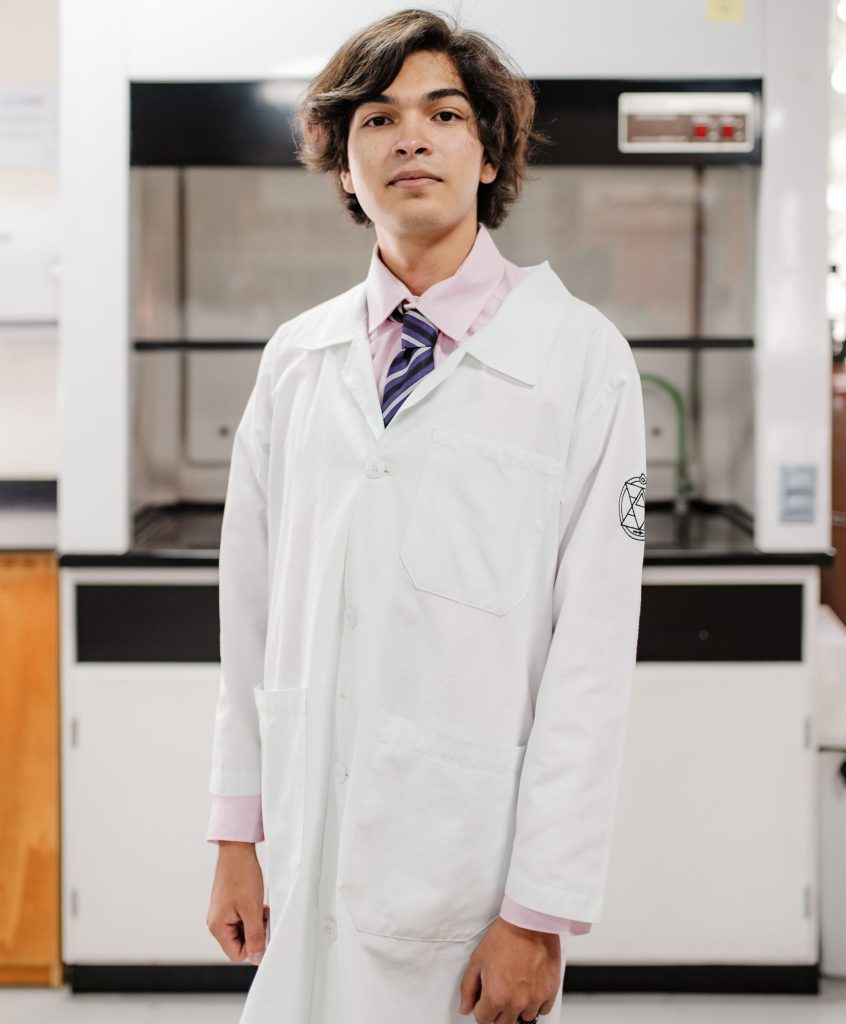
Jeber Barahona, Pharmaceutical Chemistry Student at UVG
Jeber David Barahona Martinez is a pharmaceutical chemistry student at UVG’s Central Campus. Following the completion of his bachelor’s degree, Jeber plans to pursue a degree in pharmaceutical auditing followed by a Master’s Degree in medicinal plants from the University of San Carlos de Guatemala. When asked what drew him to this field of study, Jeber replied,
“I really like to investigate the botany and homeopathic characteristics of each plant, for that reason I really like the forms of extraction of its secondary metabolites such as distillation processes. Simultaneously to the postgraduate I want to start my work stage dedicating myself the first years to pharmaceutical quality control. After finishing my master’s degree in medicinal plants, I intend to study for a doctorate related to genetic engineering, but I have not yet investigated where I can do it.”
When discussing the challenges Jeber faced during his essential oils value chain research, Jeber replied with observations related to global issues within the larger field of pharmaceutical development. Elucidating further on these challenges, Jeber stated,
“One of the most important challenges in this field for Pharmaceutical Chemists is the antibiotic resistance of microorganisms. Resistance is due to the misuse of drugs and their free sale related to their massive consumption. People who consume antibiotics for a flu or a mild headache give way to this resistance. It is an increasingly worrying issue, and it is estimated that the next pandemic will be pan-resistant bacteria.
Another challenge is innovation in drugs, for example the case of Ranitidine in Guatemala, this was a good drug to reduce discomfort caused by gastric acid, but it had traces of harmful compounds and was withdrawn from the market. For this reason, drug innovation, quality control, and alternatives to antibiotics are a major challenge at this time. Because we must begin to be aware of antibiotics and various drugs that are abused, in addition to finding alternatives to many of them and making it known that consumption must be sensible.”
When asked about the role that interpersonal support or guidance played in his success within ASPIRE, Jeber shared that he was pleased to have met so many people within the project who motivated him through thought-provoking interactions. Rodrigo Aragón, UVG ASPIRE Researcher, was someone of note that Jeber mentioned inspired him a great deal. Additionally, interactions with ASPIRE’s partners, such as those present during ASPIRE’s visit to APAESA’s essential oils production site, were extremely helpful in encouraging Jeber’s work. In particular, Jeber wished to highlight his time speaking with an Ing. Jorge Mazariegos who works with APAESA and lent the ultrasonic machine for experiments. Ing. Mazariegos spent time visiting the UVG students and discussing various plants with aromatic characteristics. Jeber stated that he found these conversations to be exceptionally beneficial to his knowledge about the broader market of essential oils.
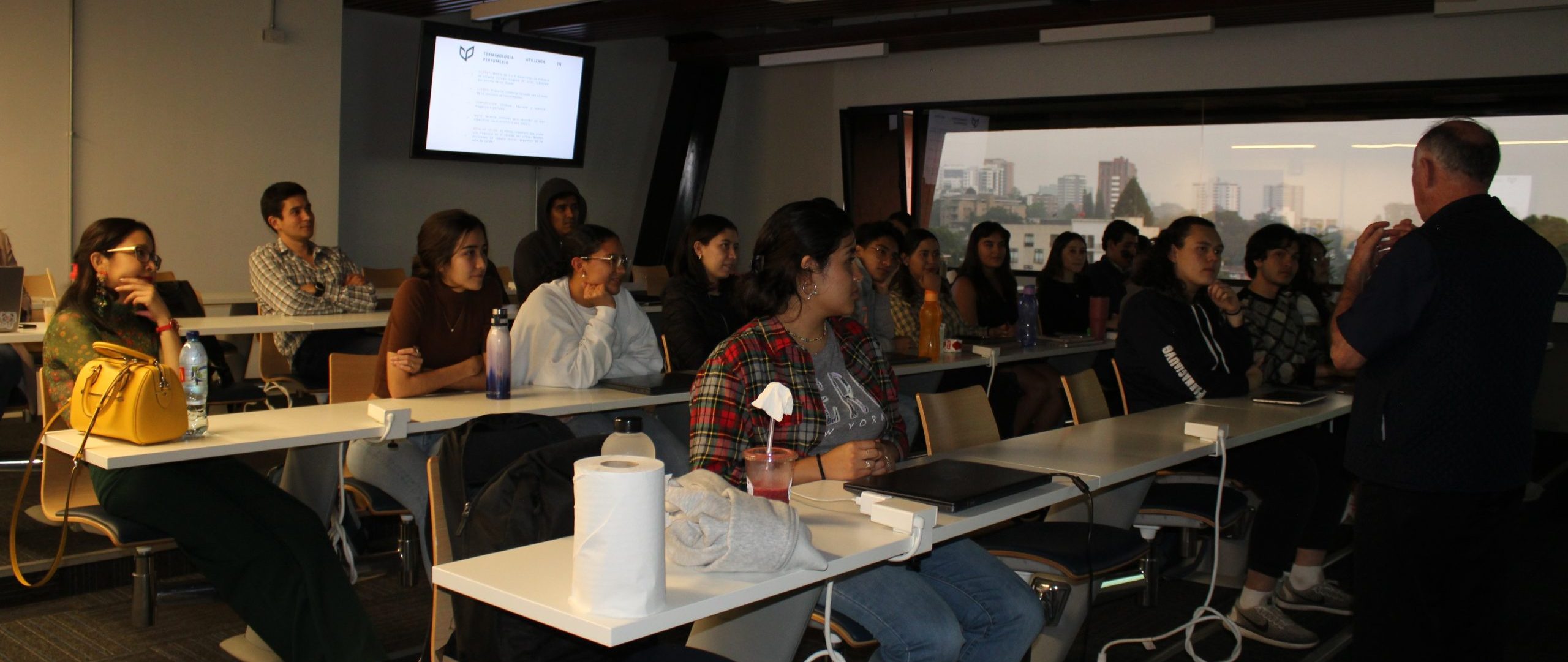
As a final note, Jeber shared the inspiration he felt following the UVG visit from perfumer Alfonso Luege, whose visit, Jeber stated, ignited his interest in a field that he was previously unaware of.
“Thanks to his explanation about the aromas and how they are characterized, as well as the depth of the subject. In this way I began to investigate aromas and the work of perfumers.”
When asked what he has found to be most profound about his time in ASPIRE, Jeber shared,
“It allowed me to perform as a professional even when I was in my fifth semester of university. It is an opportunity that I am very grateful for because it allowed me to understand more about essential oils and their use, as well as their extraction in industrial processes. I remember thinking how much I appreciated being allowed to perform as a professional even without being one.
I think everything surprised me. The way in which they allowed me to demonstrate my skills, the continuous support and the access to everything related to the portal [RETOS platform].”
Lastly, the ASPIRE team wanted to gain insight into the role Jeber felt the project could play in the future prosperity of Guatemala. His response was,
“Before ASPIRE, I was unaware of the impact of essential oils on the industry and its economic importance. When ASPIRE started I began to relate to business issues.”