
ASPIRE holds an Inclusive Innovation workshop at the UVG Altiplano Campus
Date:
November 14, 2023
Date:
November 14, 2023
By: Janine Sazinsky
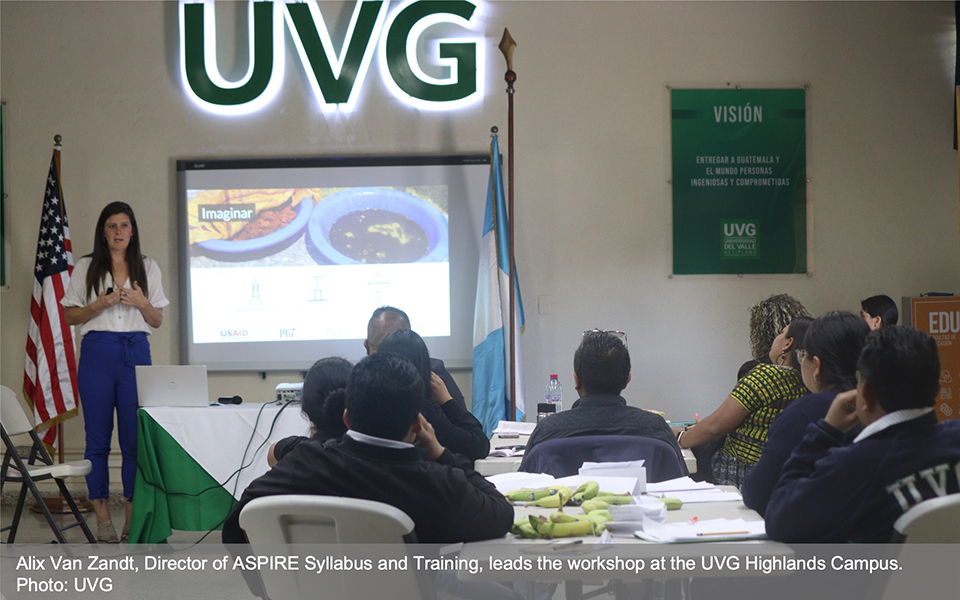
During the month of September, ASPIRE held a two-day event at the Universidad del Valle de Guatemala (UVG) Highlands Campus. On the first day, a training on Inclusive Innovation was carried out for two different groups: the teachers of the UVG Technological Institute (ITEC) and those of the UVG Highlands Campus.
On this day in which more than 40 teachers participated, the ASPIRE team worked together with the participants of both groups to strengthen their co-creation capacities through practical exercises. In addition, current ASPIRE projects that have used these design methodologies were successfully presented, especially emphasizing projects that are implemented within rural communities in Guatemala.
During the second day, ASPIRE representatives toured the Highlands Campus facilities to meet the key actors in the innovation ecosystem on campus, learn from them and about the projects they are working on. Furthermore, it was important to get to know the spaces where these projects are being carried out, such as laboratories, makerspaces, among others. This tour allowed for a better understanding about the context of the campus in order to adapt and replicate the training pilots already carried out on the Central Campus in the coming years.
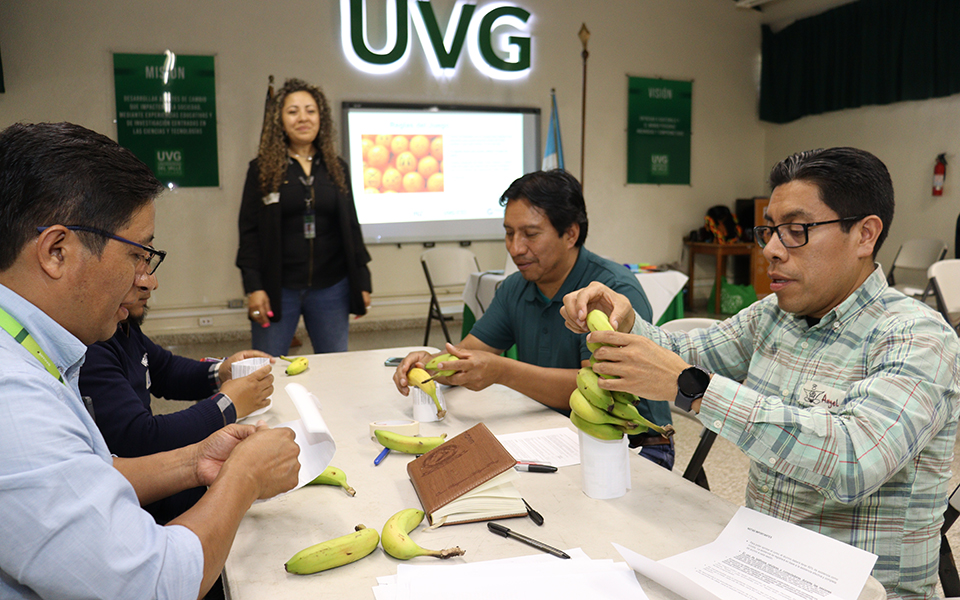
Participants carrying out a practical co-creation exercise during the UVG Highlands Campus workshop. Photo: UVG
It should be noted that in June of this year, ASPIRE also held a training workshop on these topics at the UVG South Campus, and will continue to promote work with both campuses to strengthen the capacities of researchers and teachers on all three UVG campuses.
About ASPIRE
The Achieving Sustainable Partnerships for Innovation, Research and Entrepreneurship (ASPIRE) Project is a five year, $15 million project funded by USAID and implemented by the Massachusetts Institute of Technology (MIT), Universidad del Valle de Guatemala (UVG), and the Guatemalan Exporters Association (AGEXPORT). Its goal is to create a world-class, replicable model for how Latin American universities, in collaboration with the private sector, government and local communities, can respond to local and regional development needs. The project implements a collaborative approach to research, teaching, innovation, entrepreneurship, and tech transfer, based on the combination of local assets and knowledge with MIT’s experience in the innovation ecosystem.