
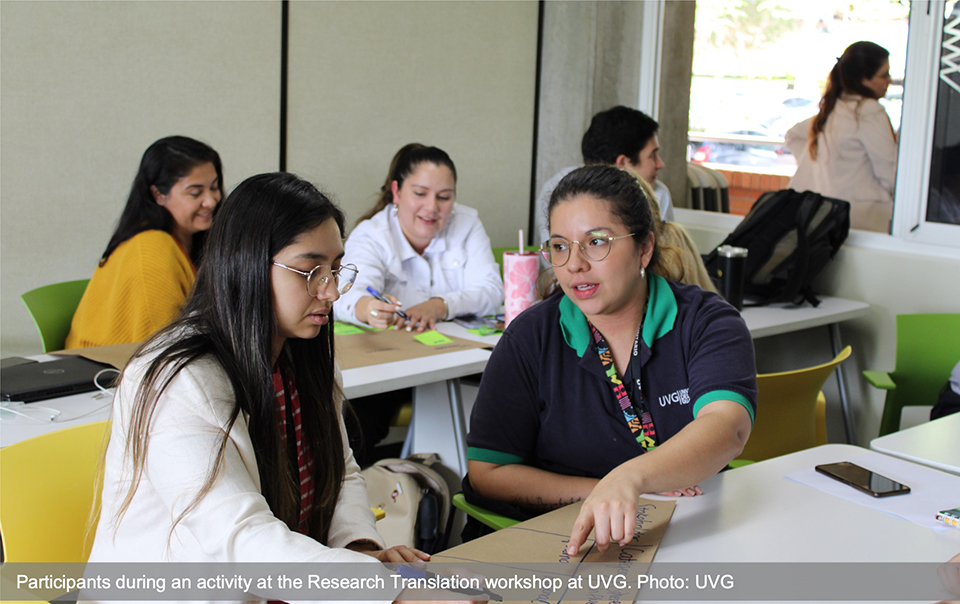
ASPIRE offers a workshop on USAID tools in research translation to UVG researchers
Date:
November 15, 2023
Date:
November 15, 2023
By: Janine Sazinsky
For academics and practitioners alike, one fundamental question that persists is, “How does one effectively communicate the results of scientific research to different audiences, particularly practitioners?” Sofia Mazariegos, Engagement and Research Transfer Coordinator with the ASPIRE Project, managed to answer this question during the workshop titled, “Research Translation,” presented to researchers from different research centers at the Universidad del Valle de Guatemala (UVG). The workshop took place at UVG’s main campus from October 25 to 26, 2023, and was based on the tools contained in USAID’s Research Translation Toolkit, a practical resource designed to help users communicate, adapt, and translate research results to different audiences.
The task of communicating scientific results often falls on the shoulders of research authors. Therefore, as admitted by the participants themselves, getting researchers to communicate in non-researcher ways can be challenging. To help researchers think about communicating effectively with non-researcher audiences, Ms. Mazariegos helped them think about the variety of stakeholders first, and then identify what their interests and/or needs are. To achieve this, the toolkit’s resources on stakeholder identification, mapping, and prioritization were very helpful. Within this framework, all actors, whether they are organizations or people, are identified and their level of influence and interest in the research project is evaluated. This helps the researchers identify possible allies, counterparts and potential detractors to the research at hand. Once the different actors and their interests are clearly identified, mapped, and recorded, each stakeholder group’s preferred way to receive information is identified to optimize effective communication between researchers and the various stakeholder groups.
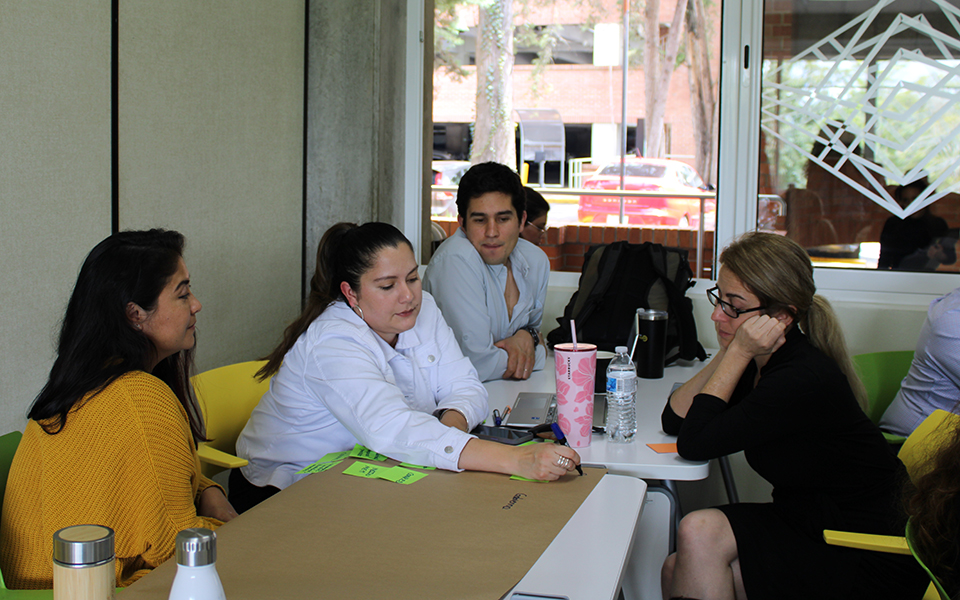
Researchers working on a Mapping of Actors at the Research Translation workshop at UVG. Photo: UVG
Adilia Blandón, ASPIRE Project Researcher, presented to the group her positive experience using these tools and compared it with previous experiences in which she did not use them. Ms. Blandón specifically mentioned how useful the toolkit was to her work on one of ASPIRE’s projects currently being implemented related to post-harvest practices with avocado. Using the tools with stakeholders contributed to better communication and collaboration between the research team and stakeholders, which has resulted in a more fluid research process. On the second day of the workshop, participants used the tools in practical exercises designed to help researchers identify and prioritize stakeholders, and to plan communication strategies and products to share the results of their research. To emphasize the importance of effective communication, Víctor Ayerdi, UVG Project Director for ASPIRE, presented his experience when he worked as Project Director of Quetzal-1, the innovative UVG project that launched the first Guatemalan satellite into space. Mr. Ayerdi shared advice based on the communication strategy used to publicize the process of creating Quetzal-1, as well as the results of its trip into space. For example, the satellite team wrote and published a total of 55 press articles, organized press conferences to announce milestones, offered workshops in schools, and held two contests for children and young people to create a logo for the project and select the satellite’s name. These efforts managed to publicize UVG’s work in launching the first Guatemalan satellite into space and to motivate Guatemalan youth to dream big.
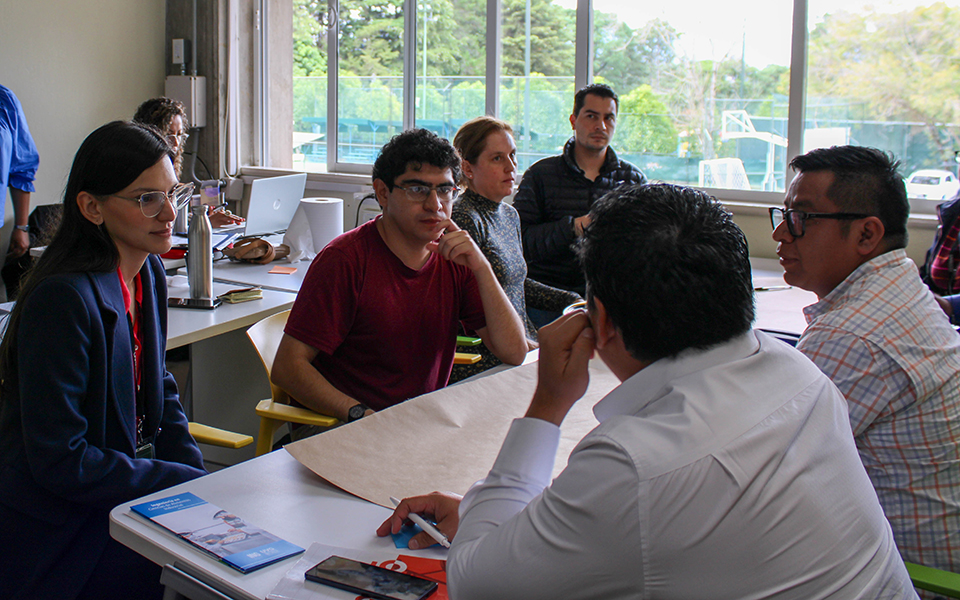
Group of participants looking to produce a mapping of actors at the workshop. Photo: UVG
“It is wonderful that these opportunities exist in order to show what can be done,” said Ana Aidé Cruz, from the UVG Educational Research Center (CIE). Participants expressed their gratitude for the workshop and all of its tools that they were introduced to in order to identify and engage stakeholders, and effectively communicate their research results.
About ASPIRE
The Achieving Sustainable Partnerships for Innovation, Research and Entrepreneurship (ASPIRE) Project is a five year, $15 million project funded by USAID and implemented by the Massachusetts Institute of Technology (MIT), Universidad del Valle de Guatemala (UVG), and the Guatemalan Exporters Association (AGEXPORT). Its goal is to create a world-class, replicable model for how Latin American universities, in collaboration with the private sector, government and local communities, can respond to local and regional development needs. The project implements a collaborative approach to research, teaching, innovation, entrepreneurship, and tech transfer, based on the combination of local assets and knowledge with MIT’s experience in the innovation ecosystem.