
ASPIRE moves forward with action plan for first pilot research projects
Date:
January 6, 2023
Date:
January 6, 2023
By: Alison Young
UPDATE: During the first week of January 2023, a co-creation workshop was held where UVG researchers were integrated with key actors within their research teams. While working in these teams, researchers and key actors set to work reviewing and strengthening the research proposals. During this meeting, participants provided feedback on progress, and worked together to map key actors whose participation will help ensure the projects’ sustainability. Both teams went from being multidisciplinary and academic, to forming multisectoral teams including producers, businessmen, community representatives and field technicians. In the next stage, the ASPIRE and USAID teams will evaluate the proposals to ensure that they meet the requirements to begin implementation.
————————————————————————————————————————————————————————
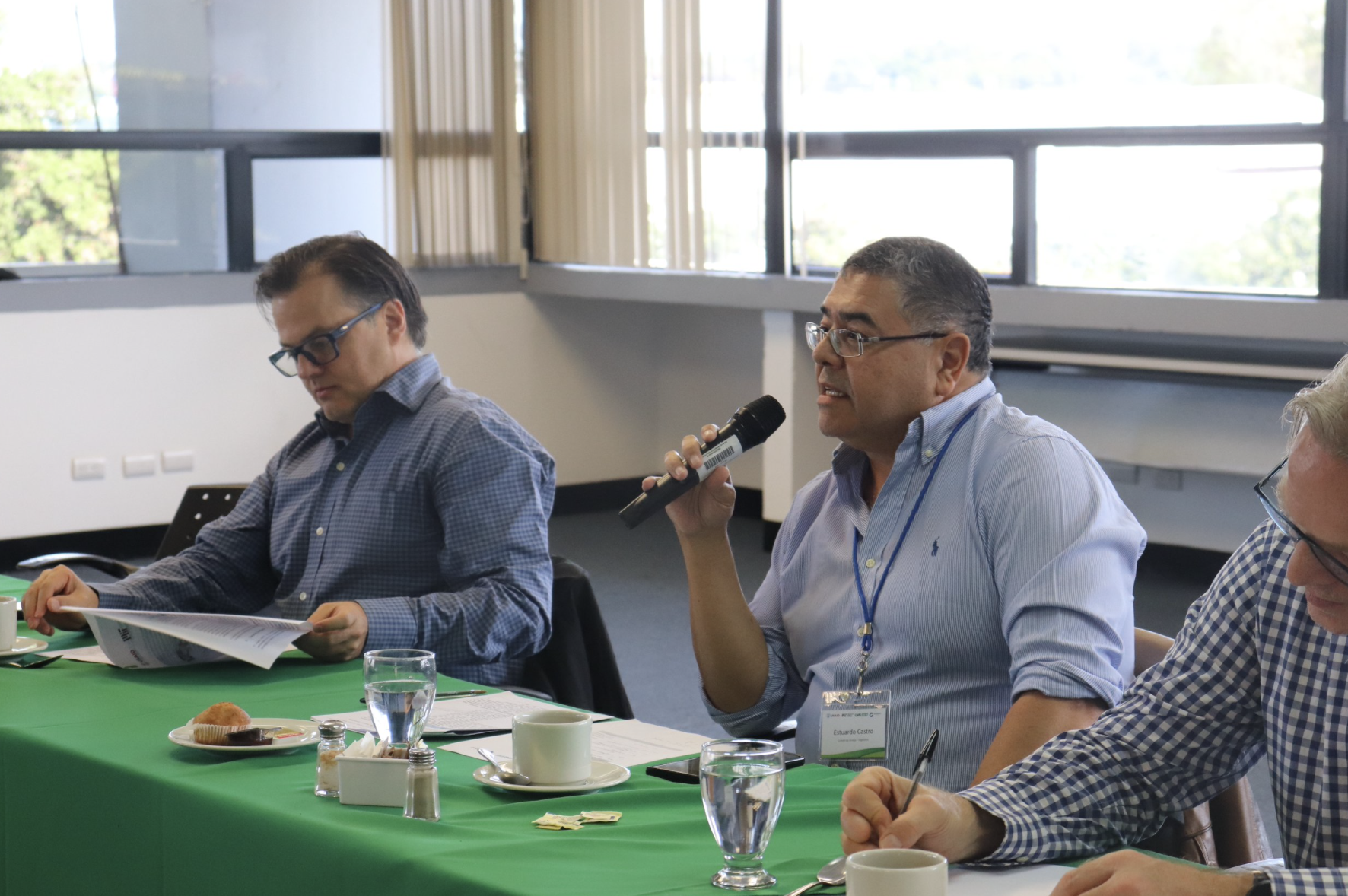
On Wednesday, August 31st, members of the ASPIRE Project presented action plans, scopes of work, and objectives for pilot research projects in front of representatives from AGEXPORT’s six value chains. These presentations are part of the necessary early steps to advance ASPIRE’s multi-sectoral approach to conducting collaborative research projects.
Representatives participated in this meeting to learn more about how this first round of research projects will unfold in the priority sectors of cardamom, snow peas, aquaculture and fishing, avocado, essential oils, and sustainable tourism. Participants agreed that there is a need to link the academic components of research projects with the real-world efforts being undertaken by the productive sector. The results of this combined effort are expected to support innovative initiatives and produce local benefits throughout Guatemala, where Universidad del Valle de Guatemala (UVG) and AGEXPORT perform their work. Andreas Kuestermann, President of the Sustainable Tourism Commission at AGEXPORT, indicated that these efforts will generate a set of comprehensive, innovative, long-term solutions, promoting sustainable changes in each sector.
Ana Lucía Solano, Research Coordinator of UVG for the ASPIRE Project, stated that one of the main objectives of the project is to strengthen the skills of faculty, researchers, and students in carrying out high-quality research. This research will generate innovative solutions that are relevant to solve local and regional challenges. The pilot research projects in each of the six sectors will support the goal of encouraging innovation to take place in collaborative work spaces between academia and the productive sectors.
Following a concept note and full proposal evaluation process, ASPIRE will support multidisciplinary research projects utilizing the collaborative work method. The work getting these projects off the ground will begin with the first six one-year pilots projects that are submitting proposals in hopes of receiving up to $100,000 in funding to begin the work.
The call for concept notes for research project proposals was open from September 16th to October 10th. 19 proposals were received in total from UVG researchers and faculty. Those that met the selection criteria of ASPIRE-UVG and USAID went to a second phase of the co-creation process.
During the first meeting held on November 10, the participants received the instructions on the co-creation process and presented the 4 selected concept notes (2 for cardamom and 2 for snow peas). In the second session, held on November 14, the multidisciplinary research teams were integrated, the main roles of the team members were defined. Ana Lucía Solano detailed the requisites to be selected for the next phases.
About the ASPIRE Project
The Achieving Sustainable Partnerships for Innovation, Research and Entrepreneurship (ASPIRE) Project is a five-year, $15 million project funded by USAID and implemented by the Massachusetts Institute of Technology (MIT), Universidad del Valle de Guatemala (UVG) and the Guatemalan Exporters Association (AGEXPORT). The goal of the project is to create a world-class, replicable model for how Latin American universities and their collaborators can respond to local and regional development needs. The project implements a collaborative approach to research, teaching, innovation, entrepreneurship and tech transfer, based on the combination of local assets and knowledge with MIT’s experience in the innovation ecosystem.