
ASPIRE selects participants for the “ASPIRE 2023 Instructors’ Program”
Date:
January 24, 2023
Date:
January 24, 2023
By: Alison Young
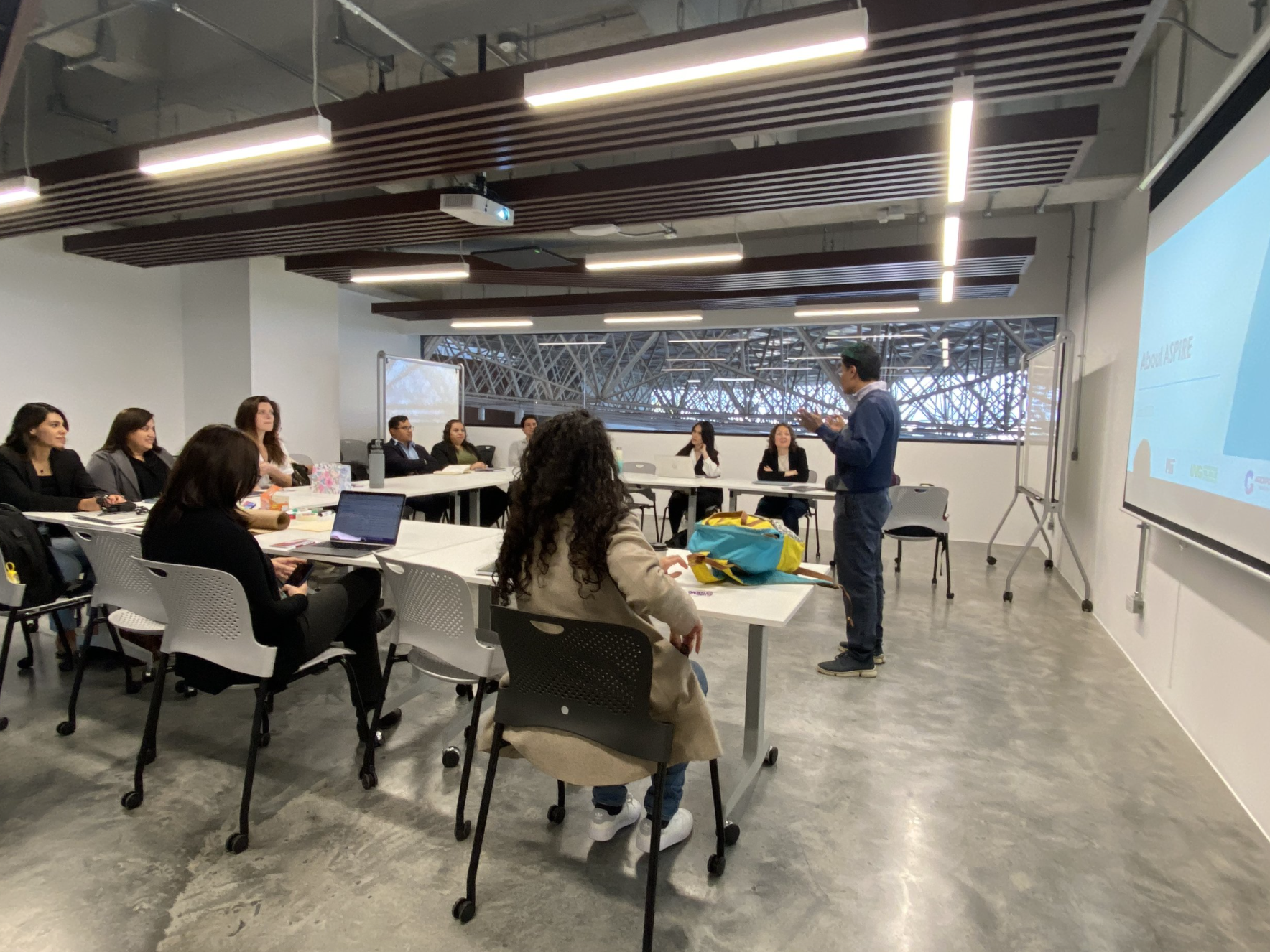
The ASPIRE Project has named its second cohort of UVG Instructors that will participate in the “ASPIRE 2023 Instructors’ Program”. This program supports the ASPIRE’s training objective, which seeks to build the capacities of UVG professors, researchers, and staff to provide world-class training and harness the power of research and innovation for development.
Participants in this training program will work to strengthen their skills and connect their classes with projects that are based on community needs. To achieve this, participants will incorporate participatory design methodologies and inclusive innovation strategies to solve local challenges.
The following Instructors were chosen as part of Cohort #2:
Amelia María De Visitacion López Perez: Amelia López, 25 years old, graduated with a degree in Engineering in Agroforestry Technology, and is an expert in the design and implementation of agroforestry systems. Amelia is a teacher, consultant, and coordinator of a project called the Ethnobotanical Garden.
César Rosales Gómez: César Gómez, a Mechanical engineer with 14 years of experience in the repair and design of industrial machinery, is interested in participating in projects with social impact, and in improving the quality of university courses.
Claudia Lorena Masek Sánchez de Mishaan: Engineer, teacher, and communicator, Claudia worked in the food industry until she found her true passion as an editor and teaching in the classroom.
Felipe Girón: Social anthropologist and teacher, Felipe has been working as an Anthropologist since 1995, and is particularly interested in community relations.
Luis Ernest Nuñez González: Professor and researcher at UVG, Luis has served as President, Vice President, and Secretary of the National Biotechnology Commission. He holds an MBA in Organizational Leadership, a Masters Degree in Management of ISO Standards, and more than 15 years of experience in plant design and production.
The program is composed of the following phases:
-
Learning Phase (January – April 2023): Professors will receive training in foundational pedagogy for the design and development of projects with communities. During this phase, MIT D-Lab instructors will provide support and mentoring to define the desired changes in UVG instructors’ courses.
-
Preparation Phase (May – June 2023): Personalized support from the ASPIRE team will continue in order to make the necessary modifications and changes to courses ready to teach in the second semester of the 2023 academic year.
-
Implementation Phase (July – November 2023): The new curricular design built during the previous phases will be implemented. The ASPIRE project will provide ongoing monitoring and feedback to support the UVG instructors. At the end of this program, there will be evaluation sessions, as well as a presentation of results and lessons learned.
About the ASPIRE Project
The Achieving Sustainable Partnerships for Innovation, Research and Entrepreneurship (ASPIRE) Project is a five-year, $15 million project funded by USAID and implemented by the Massachusetts Institute of Technology (MIT), Universidad del Valle de Guatemala (UVG) and the Guatemalan Exporters Association (AGEXPORT). The goal of the project is to create a world-class, replicable model for how Latin American universities and their collaborators can respond to local and regional development needs. The project implements a collaborative approach to research, teaching, innovation, entrepreneurship and tech transfer, based on the combination of local assets and knowledge with MIT’s experience in the innovation ecosystem.