
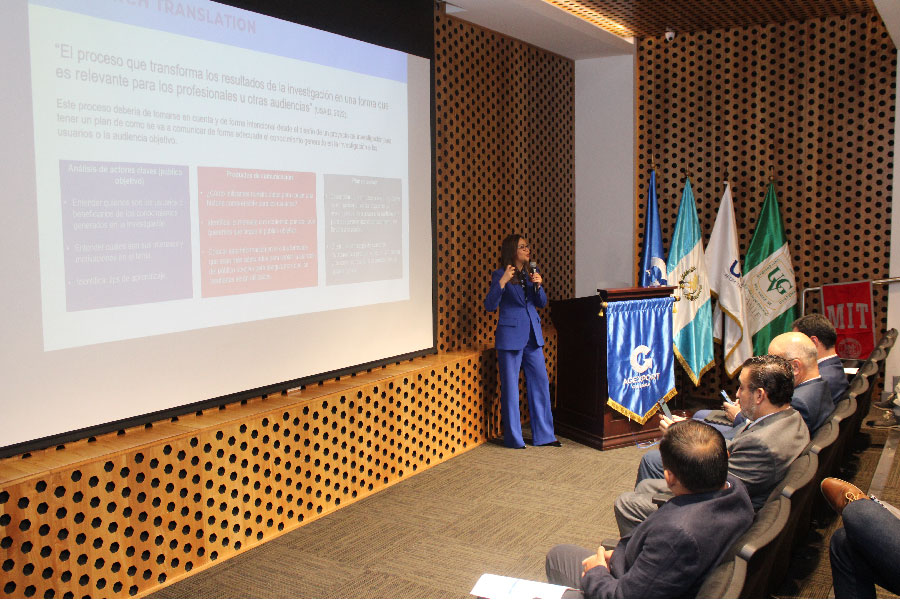
The ASPIRE Project trains researchers on USAID’s “Research Translation Toolkit”
Date:
July 12, 2024
Date:
July 12, 2024
By: Bianca Contreras
Research typically begins by narrowing down a problem to be solved, formulating a hypothesis, and setting objectives. The researcher, who possesses extensive scientific knowledge, is responsible for investigating the necessary topics to solve the problem or test their hypothesis within their professional area. However, a communication gap often arises between the general public and the researcher, as the researcher uses technical language specific to their field of expertise. How can one effectively communicate technical research to a broader audience in an easily understandable way?
The ASPIRE project tackled this issue during their training on the USAID “Research Translation Toolkit.” Trainers equipped UVG researchers with the knowledge and skills to understand and bridge the communication gap between researchers and different audiences.
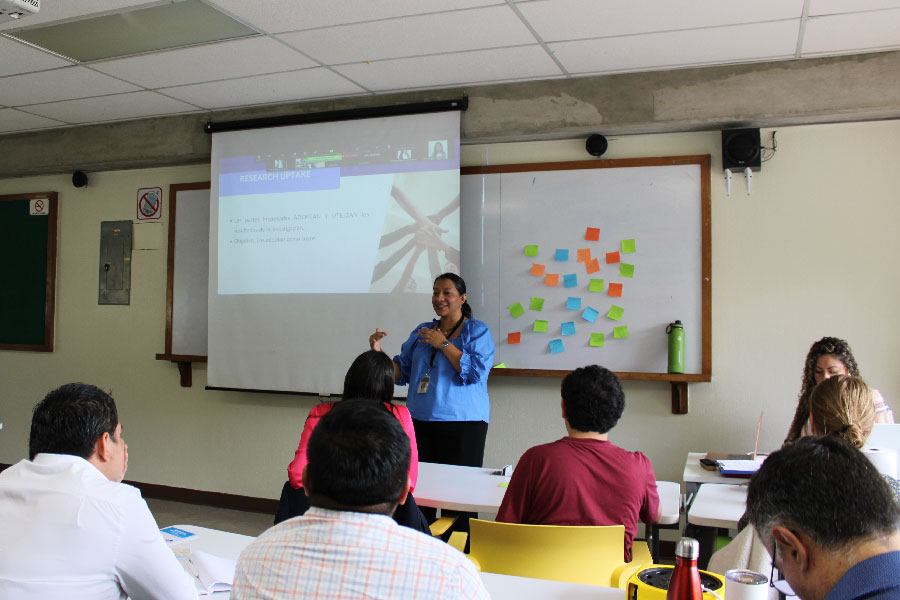
UVG researchers during a Research Translation workshop, organized by the ASPIRE project. Photo: ASPIRE
Research Translation
USAID has developed a “Research Translation” toolkit to help researchers communicate their research results effectively. The Toolkit includes templates and worksheets that guide a researcher in identifying key actors as a first step in the research process, estimating their level of influence and interest, and finding the best way to communicate with them. The Toolkit aims to help researchers communicate their findings effectively to enable people to make informed decisions. These exercises, templates, and forms serve as a manual for influencing critical decisions and achieving impact on development. The Toolkit is divided into three sections:
1.“Communications Products Section.” In this section, key messages are developed. The correct format to share research and technical information with key stakeholders is identified in a way that motivates them to use the information to create policies, programs, or practices.
2.“Stakeholder Analysis Section.” This section identifies influential people or groups that could implement the research and plan the most effective way to involve them.
3.“Research to Action Plan (R2A) Section.” This section develops a strategic plan for communicating the research effectively, attracting key stakeholders, and ensuring that the research is implemented practically.
Applying the Research Translation Toolkit in the Avocado Producers Training Project
The avocado producers training project is a research initiative by the ASPIRE project in partnership with AGEXPORT, private sector companies, the Ministry of Agriculture (MAGA), and agricultural cooperatives (small and medium producers). The project aims to bridge the gap between knowledge and best practices in postharvest handling for avocado producers. A teaching kit was developed as part of this project, featuring a board game called “Don Güicho’s Plot.” This immersive game allows teams to step into the shoes of the protagonist “Don Güicho,” and make decisions on his behalf while competing against each other. The game serves as a tool to educate producers on financial matters.
Three tools that significantly influenced the avocado producers training project include “Stakeholder Analysis,” “R2A Plan,” and “Communications Products.”
The “Stakeholder Analysis” involves assessing key actors’ commitment level, influence, and interest. This analysis proved a crucial step as it helped establish the importance of government involvement in carrying out the project. The Ministry of Agriculture’s division, which is in charge of strengthening productive organizations and marketing (DIFOPROCO), was a key actor in the research.
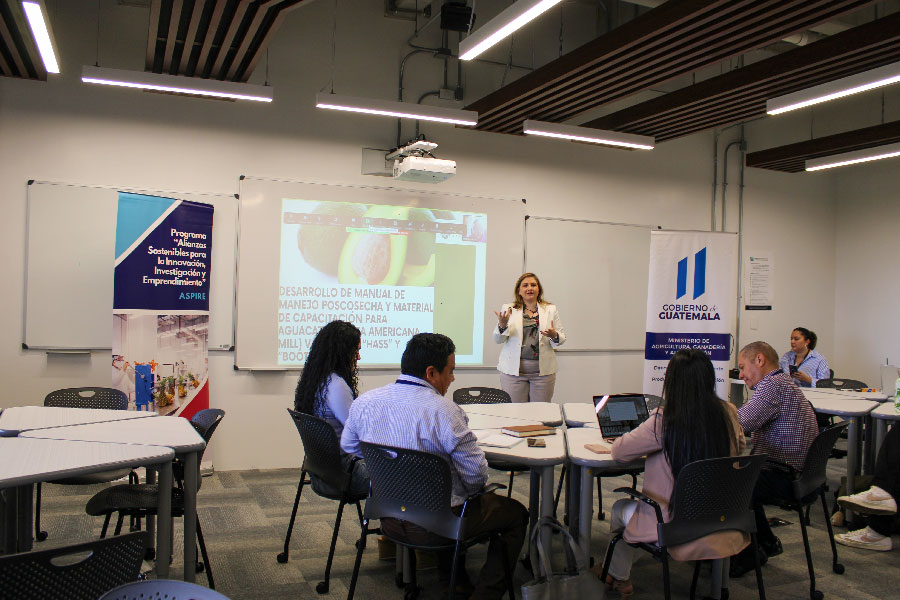
Ana Alicia Paz, UVG researcher, during a sesión with DIFOPROCO. Photo: ASPIRE
The R2A Plan, a detailed guide on how to share research findings and interact with key stakeholders to ensure research adaptation, determined the most effective way to communicate with DIFOPROCO.
The Communications Products section identified the best materials for communicating with AGEXPORT avocado producer sector stakeholders. By applying these products to the avocado producers’ training project, researchers determined that involving companies in this sector is crucial.
Adilia Blandón, a researcher with the ASPIRE project, mentioned using the “One Pager” format from the Toolkit to provide project updates to key stakeholders within AGEXPORT. This one-page summary effectively highlights the project’s progress in a simple manner, making it accessible to non-technical audiences. By extracting the most essential information from technical documents, they could send summaries of the research process while it was ongoing. These periodic progress updates strengthened the collaboration between business professionals and academia, contributing to the effective advancement of the project. Additionally, Blandón noted that the resources from USAID Communications Products helped identify that not all stakeholders prefer the same communication methods. She explained, “Producers prefer to receive information via WhatsApp, which is also acceptable.”
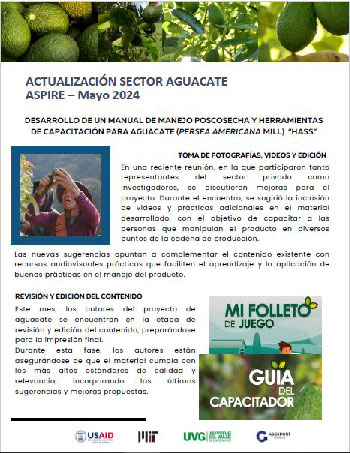
ASPIRE One Pager for the AGEXPORT avocado sector. Photo: ASPIRE
The Cocoa and Chocolate training program
The Research Translation Toolkit was likewise applied to the Cocoa training program developed by the ASPIRE Project. ASPIRE created this program to train cocoa producers and professionals in production and marketing, aiming to address the shortage of experts in cocoa exports and production in Guatemala. This program combines theoretical classes with practical experience. Key actors in the field were first identified, followed by identifying the best way to communicate with them and transform technical information into a dynamic training program, all determined by applying the USAID Research Translation toolkit tools.
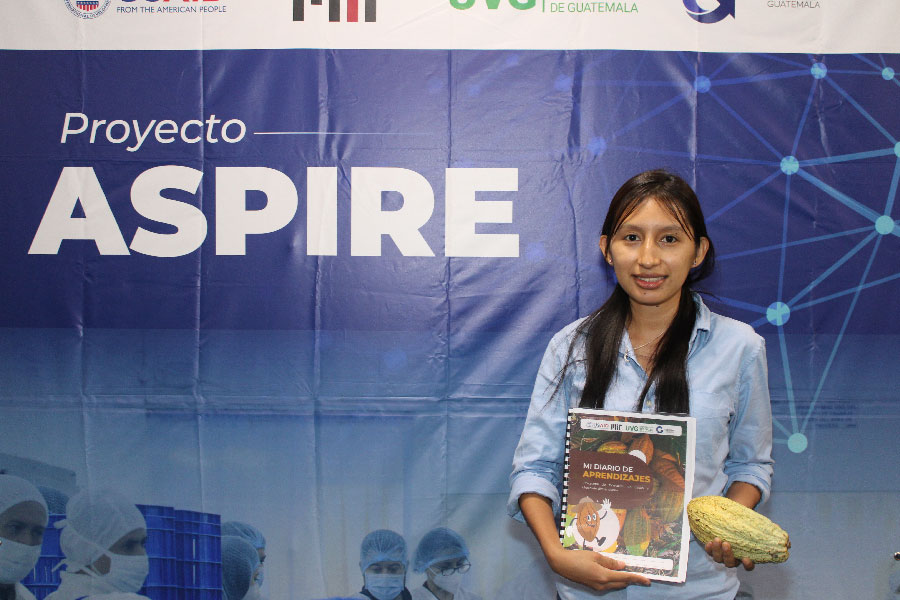
Participant showing “Learning Diary” at the inaugural session. Photo: ASPIRE
The importance of Research Translation in training the agricultural sector
The agricultural sector in Guatemala needs research translation training, particularly for small producers in the avocado industry. The demand for avocados is increasing both within the country and internationally, making training a priority across the entire value chain.
Gerardo Rosado, the ASPIRE Project Coordinator at AGEXPORT, emphasizes the growing need for small producers to supply the increasing demand for avocados in the US market. He highlights the importance of effectively training these producers, stating that a Research Translation toolkit for avocado producers will greatly benefit the thousands of small producers involved in the avocado export sector. These tools will play a crucial role in the industry by ensuring that research projects are successfully implemented in the real world.
About the ASPIRE project
The Achieving Sustainable Partnerships for Innovation, Research and Entrepreneurship (ASPIRE) Project is a five-year, $15 million project funded by USAID and implemented by the Massachusetts Institute of Technology (MIT), Universidad del Valle de Guatemala (UVG), and the Guatemalan Exporters Association (AGEXPORT), with the goal of creating a world-class replicable model for how universities, in collaboration with the private sector, government, and local communities, can respond to local and regional development needs. The project implements a collaborative approach, based on MIT’s experience in the innovation ecosystem.