
Case studies highlight inclusive innovation and co-design with communities in Solola
Date:
July 1, 2024
Date:
July 1, 2024
By: Janine Sazinsky
ASPIRE is pleased to share four case studies on inclusive innovation in the UVG community. These are the first case studies that have been planned, carried out, and written collaboratively by MIT and UVG researchers, and spotlight just a few examples of university-community innovation and university-private sector innovation already occurring across the UVG campuses.
Learning from existing examples of co-creation
The impetus to research these case studies emerged from the innovation ecosystem diagnostic research process, conducted in 2022 and presented to the UVG community in January of 2023 by ASPIRE Co-Principal Investigator Elizabeth Hoffecker. One of the findings from that diagnostic was that there were already many examples within the UVG community of collaborative and co-creative projects involving elements of inclusive innovation and co-design with members of Indigenous communities and local private sector counterparts. However, these projects and their results were not widely known across the three UVG campuses. As these are the types of projects that ASPIRE is looking to promote, bringing attention to and learning from existing examples of this type of work was identified as a priority.
Working with staff and students on the case studies
The diagnostic results provided Hoffecker with a list of 50 potential projects that could be researched further as case studies and brought UVG’s already lively innovation ecosystem to light. Hoffecker developed a research design and case study selection criteria. UVG Campus Altiplano was the location with the highest number of successful cases mentioned in that data, so she worked in collaboration with Jeremías Morales from the Na’ojilal MakerSpace at UVG Altiplano, to narrow that list down to 7 cases that met the research criteria for case selection.
After narrowing the list of potential cases, she worked with Ximena Sarmiento and Camila Del Cid, two UVG anthropology students, to jointly plan, implement, and document the case study research. The group conducted in-person field research in Sololá in April 2023 to perform interviews, visit case study sites, and learn more about the selected examples. The process of planning, implementing, analyzing, and reporting on the data served as valuable learning experiences for the students, as both are applying what they learned to successfully conduct similar research paths independently for their respective theses projects. You can read more about their work in the news piece “Elizabeth Hoffecker, Co-PI for ASPIRE, and two UVG students conduct field research on inclusive innovation projects in Sololá.”
UVG Students in the field
Ximena Sarmiento commented on her experience working on this project with ASPIRE, saying that it was a very gratifying experience where she learned a lot and got to know many people. Sarmiento would like to encourage students not to be afraid to knock on doors to ask for research opportunities, given that there are many opportunities like this for students. She said “there are people willing to help” and that many significant individuals believed in them as professionals and gave them a chance to implement their research skills.
Camila Del Cid also said that one key takeaway from his experience was “there are cases of local innovation and this project is a good way to show what people are doing.” Del Cid sees this project as an initiative to showcase an “encouraging vision of things that can be done right”. Moreover, she highlights the importance of different stakeholders uniting forces to solve problems and work together for a common cause.
Even though Sarmiento and Del Cid faced many challenges, one of the biggest learning opportunities was how to work together as a team and communicate their struggles with each other to find a solution together. They also learned that they didn’t need to have all the answers but “be willing to ask questions,” said Sarmiento. “Most of the challenges we faced, we solved them together.”
The four case studies, available in Spanish:
“Towards inclusive innovation: co-creation experiences”
By: Camila del Cid Saavedra, Ximena Sarmiento García y Elizabeth Hoffecker
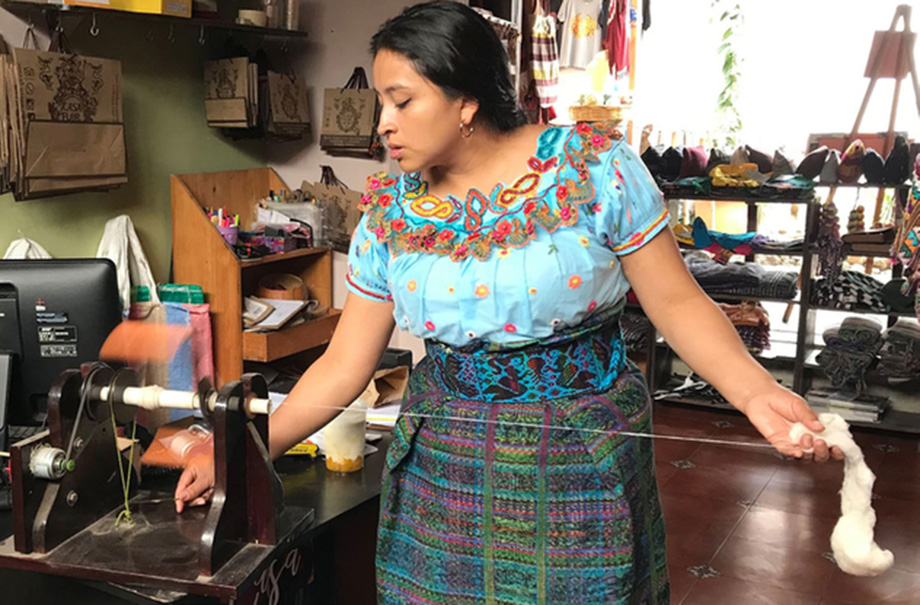
Case study #1 “Innovating the production of traditional thread in San Juan La Laguna”
Case study #2 “Logical Reasoning Kit, from the university to the community”
Case Study #3 “The Ethnobotanical Garden of San Andrés Semetabaj”
Case Study #4 “3D Phytoplankton Kit: The scientists approach to learning from the lake”
The case studies not only brought together faculty, students, and community members to collaborate and learn from each other; they also showcased the deeply rooted innovation and collaborative entrepreneurship already abundant in UVG’s communities. The case study research team, including Hoffecker, both students, and Jeremías Morales plan to extend their research collaboration by jointly writing a scientific paper based on the case studies as a next step, with an abstract already submitted and under review.
As Hoffecker puts it, “These case studies address a demonstrated need within UVG’s innovation ecosystem to document and bring visibility to successful examples of multi-stakeholder, co-creative innovation and design work taking place in collaboration with members of indigenous communities, civil society, and local enterprises (community-based private sector). The case studies provide insights into what is required from a process standpoint to implement these kinds of projects, as well as valuable lessons learned that can inform others who are interested in engaging in this kind of work.”
About the ASPIRE project
The Achieving Sustainable Partnerships for Innovation, Research and Entrepreneurship (ASPIRE) Project is a five-year, $15 million project funded by USAID and implemented by the Massachusetts Institute of Technology (MIT), Universidad del Valle de Guatemala (UVG), and the Guatemalan Exporters Association (AGEXPORT), with the goal of creating a world-class replicable model for how universities, in collaboration with the private sector, government, and local communities, can respond to local and regional development needs. The project implements a collaborative approach, based on MIT’s experience in the innovation ecosystem.